How to Refresh Your Routine This Spring With Hizo

Spring is a wonderful time of year that often makes people want a fresh start. When the days start to feel longer and warmer, and you find a little extra energy, it can feel like the perfect time to make some changes. That is usually where routines fall apart.
When you're thinking about refreshing your routine, it's often helpful to keep it small and manageable. You don't need to do a total reset. You need a few easy actions that help you feel better, think more clearly, and move through your days with less friction.
This guide is built around small changes that actually fit real life.
Start with something simple
A lot of people try to refresh their routine by adding too much at once. More exercise, cleaner eating, better sleep, journaling, less screen time, more reading, and a perfect morning routine all in one week. That plan looks nice for about three days, then collapses like a cheap garden chair.
A better approach is to choose 2 to 4 small habits that feel light enough to repeat on an ordinary day. When your routine is simple, you are more likely to keep going. That matters more than having an ambitious list.
A good spring routine usually includes:
- One habit for your body
- One habit for your mind
- One habit for your environment or daily rhythm
The goal is not to become a new person by Monday. The goal is to make your days feel a little better, one repeatable action at a time.
Build around small actions
The easiest way to stay consistent is to reduce how much effort it takes to begin.
A routine refresh should be a part of your routine, no matter how you're feeling. It should be something that's so clear and manageable that you can still do it when your day is busy.
A simple formula that works:
- 1 minute habit for low effort consistency
- 10 minute habit for movement or focus
- 1 supportive habit that improves your day indirectly
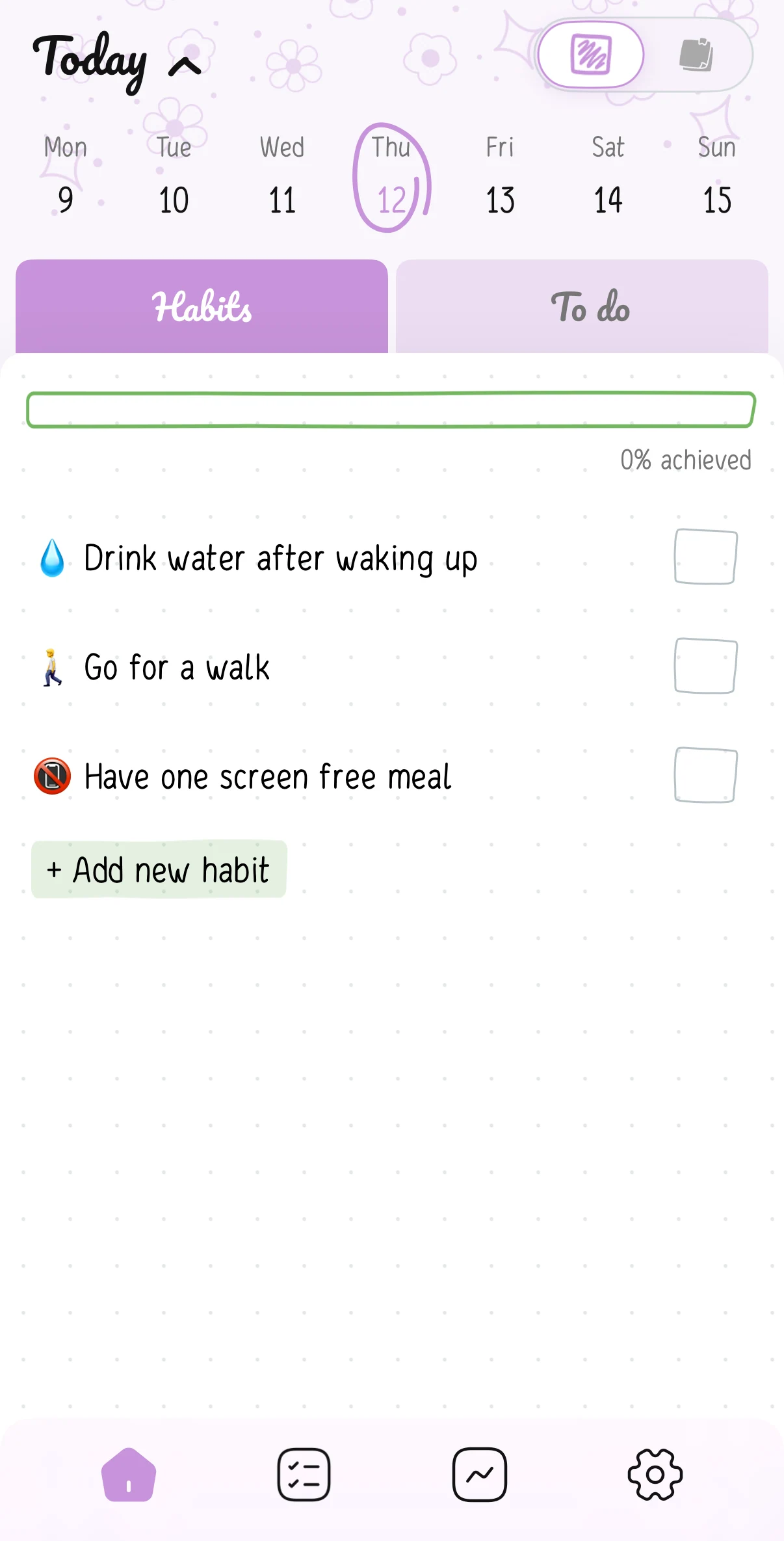
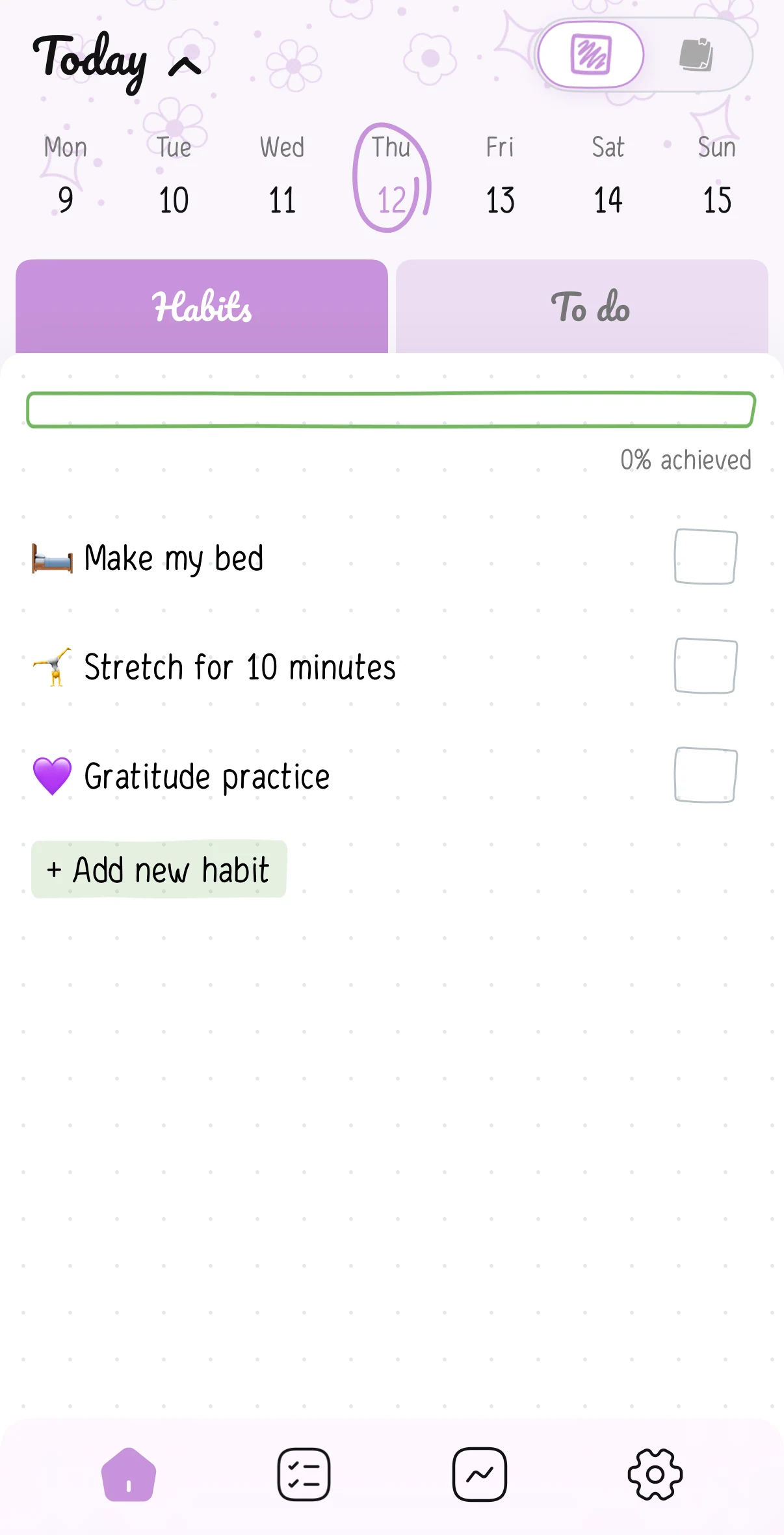
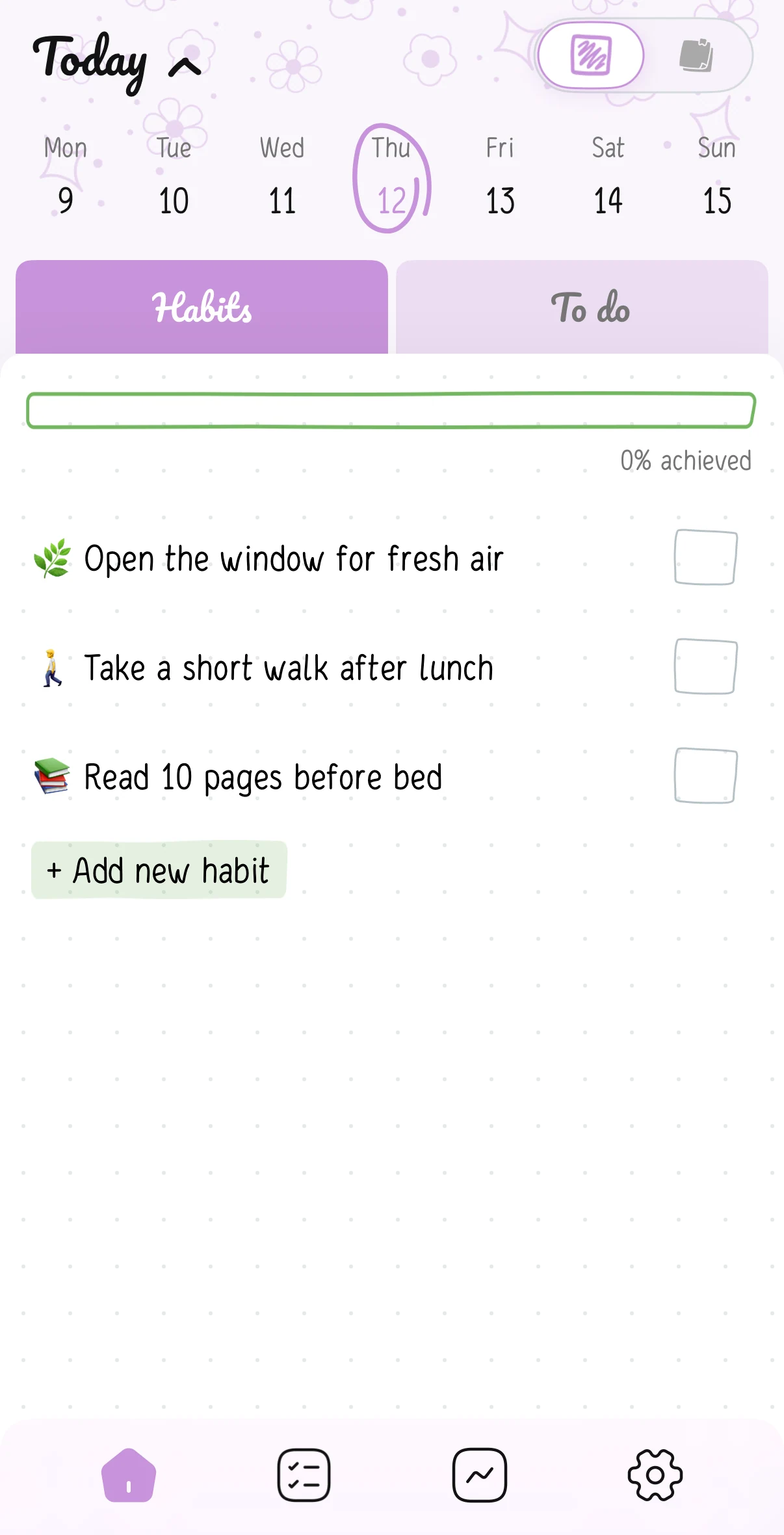
That is already a strong reset. It is enough to improve how you feel without creating pressure.
Choose what you want to refresh
The best habits are the ones that feel right for you in the moment. Some people prefer mornings that are more relaxed. Some want more energy. Some just want to feel less distracted. Others just want to feel a little lighter and more like themselves again.
That's why it's so helpful to pick a theme before you choose your habits. Instead of trying to improve everything at once, try asking yourself one simple question:
What would make my days feel better this spring?
Pick one area that feels most relevant to you, and then build a few small habits around it.
1. Refresh your mornings
If your mornings feel rushed, heavy, or unstructured, start here.
A better morning routine doesn't have to be long or perfect. It just needs to help you wake up, feel more present, and start the day with a little more intention.
A simple setup could look like this:
- 1 minute habit: 🛏️ Make your bed
- 10 minute habit: 🤸♀️ Stretch for 10 minutes
- supportive habit: 💧 Drink water after waking up
This combination works well because it gives you a quick win, a little movement, and one easy action that helps your body wake up. It is simple enough to repeat, even on busy mornings.
2. Refresh your body
If you feel low on energy, stiff, or a little out of sync after winter, focus on habits that help your body feel more awake and supported.
You do not need an intense workout plan. Often, the most helpful reset comes from simple movement and a few better choices during the day.
A simple setup could look like this:
- 1 minute habit: 💧 Fill your water bottle
- 10 minute habit: 🚶♀️ Go for a walk
- supportive habit: 🥗 Eat one healthy meal
This works because it covers the basics without making your routine feel demanding. You stay hydrated, move a little more, and support your energy in a realistic way.
3. Refresh your focus
If your mind feels overwhelmed and you're constantly distracted, try picking habits that give you more space in your day. Focus is not always about doing more. Sometimes it is about reducing noise.
A simple setup could look like this:
- 1 minute habit: 📝 Write down your top task for the day
- 10 minute habit: 📚 Read for 10 minutes
- supportive habit: 📵 Have one screen free meal
This combination helps because it gives your mind a clear starting point, a break from constant input, and one daily moment with less distraction.
4. Refresh your mood
If you feel a bit flat, emotionally tired, or disconnected from yourself, start with habits that bring comfort, calm, or enjoyment back into your days.
A simple setup could look like this:
- 1 minute habit: 💜 Write one thing you are grateful for
- 10 minute habit: 🎶 Listen to music / 🎨 Do a hobby
- supportive habit: 🙌 Talk to a friend / ☀️ Spend a little time outside
This works because it combines reflection, enjoyment, and connection. These are small actions, but they can make your days feel softer and more balanced.
Support your new routine
Once you know what you want to work on, the next step is to make sure your routine is not too overwhelming.
One of the most useful things you can do is to pay attention to small patterns. When a habit seems easy one day and difficult the next, there's usually a reason for that.
- Maybe it worked better because the weather was nice.
- Maybe you forgot because your morning felt rushed.
- Maybe it was easier at a different time of day.
- Maybe preparing something in advance helped more than you expected.
A short note can already tell you a lot.
- Walking felt easier because the weather was warm
- I skipped stretching because I started work too late
- Screen free lunch helped me feel calmer
- Water was easier when I filled the bottle in advance
These details might seem small, but they add up over time and become useful. You stop wondering why something works and start noticing what actually supports your routine.
It also helps to check in with yourself once a week. You do not need a big review, just a few quiet minutes to look back and notice what felt natural and what did not. You can ask yourself:
- Which habit felt the easiest?
- Which one kept getting skipped?
- What time of day worked best?
- What felt worth keeping next week?
This kind of reflection helps you see your routine as flexible and realistic. Instead of being hard on yourself, you learn how to adjust it so it fits your life better.
Try a simple 7 day reset
If you are not sure where to begin, start with a short experiment instead of building a whole new routine at once. Try a Hizo 7 day spring reset.
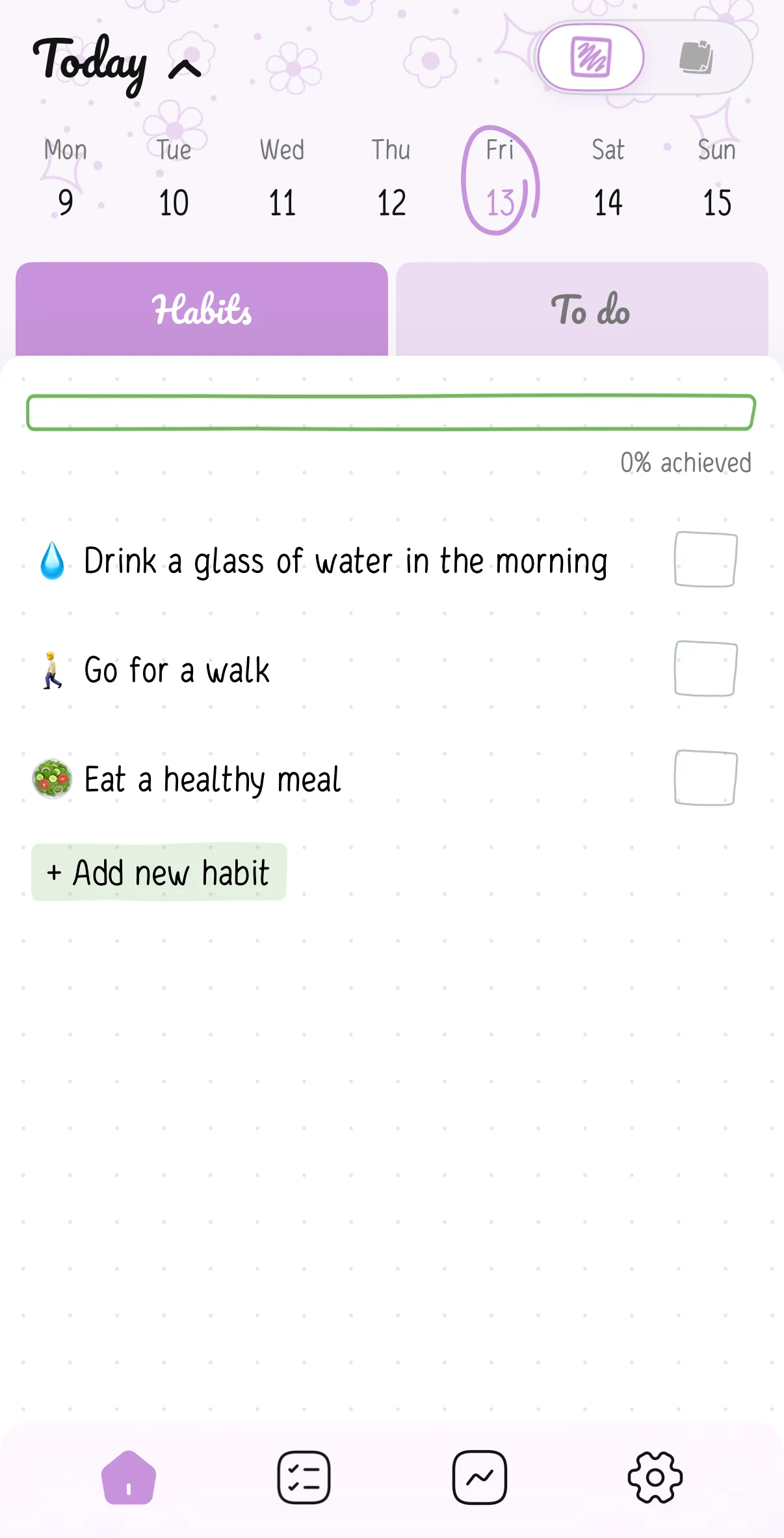
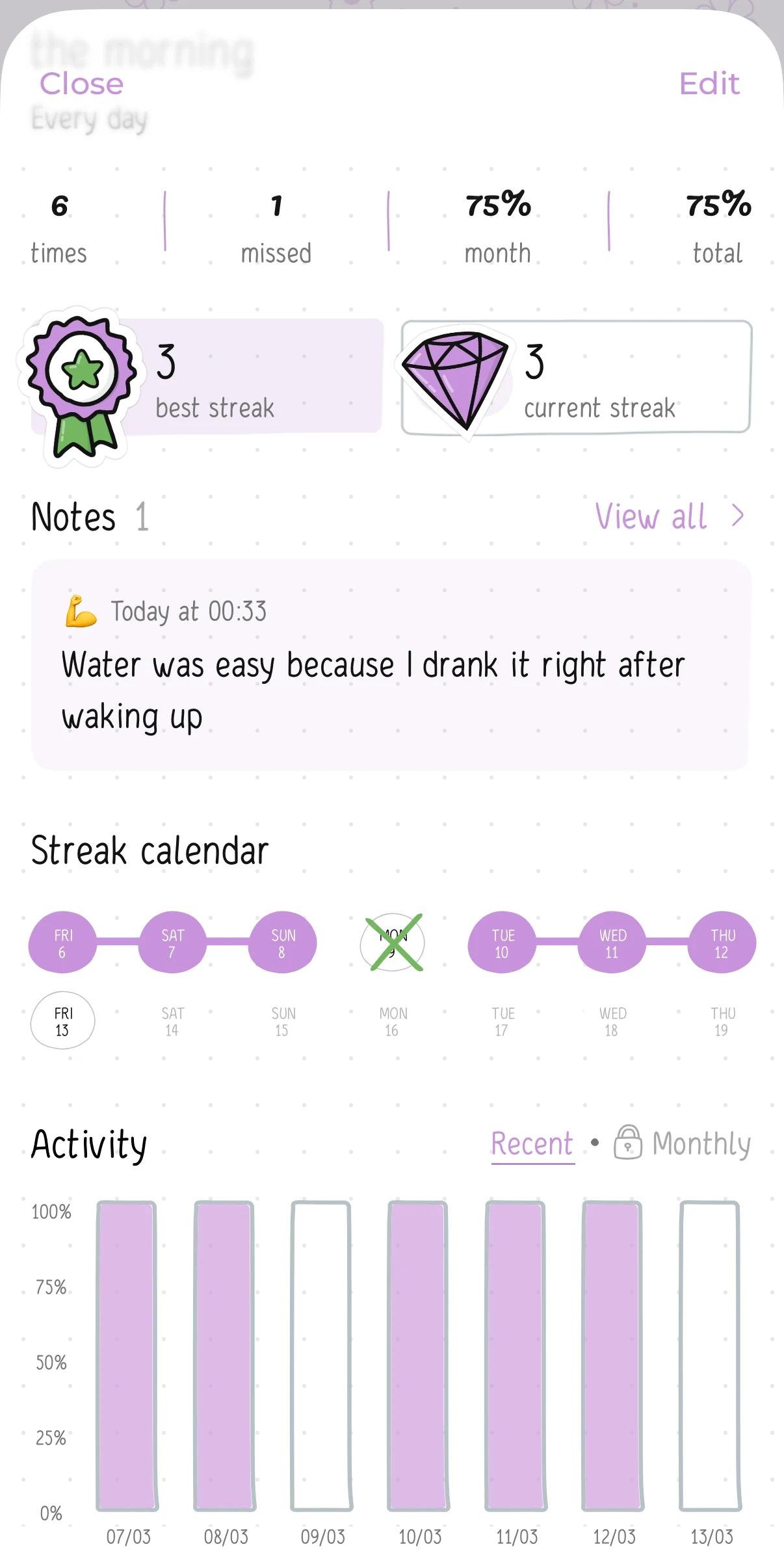
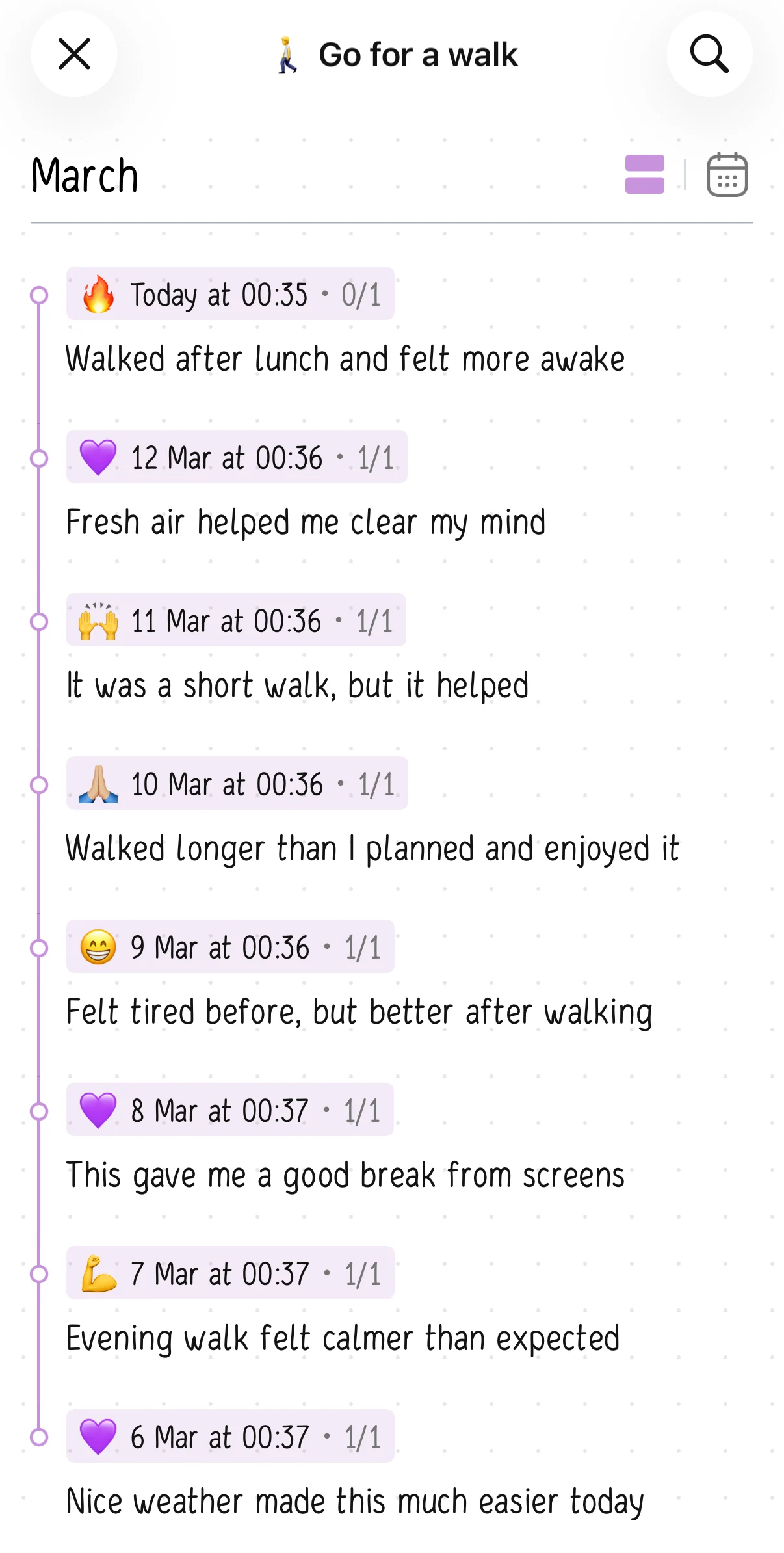
The idea is simple: pick three small habits, track them for one week, add short notes, and then look at what actually felt realistic. This gives you a clear starting point without pressure and helps you build a routine based on real life, not on a perfect plan.
1. Add 3 habits to your Hizo
Use one habit from each level:
- 1 minute habit: 💧 Drink a glass of water in the morning
- 10 minute habit: 🚶 Go for a walk
- supportive habit: 🥗 Eat a healthy meal
This is a good starting combination because it is balanced and easy to maintain. You have one habit that is almost effortless, one habit that helps you move, and one habit that supports your day in a simple practical way.
2. Check them for 7 days
Do not try to make the week perfect. Just try to show up each day and check the habits you completed.
The goal of this reset is not to get ideal results. The goal is to notice which actions feel easy to repeat and which ones need a smaller step or a better time in your day.
3. Add a short note every day
Checking a habit only tells you what happened. A short note helps you understand why it happened. For example, a habit may look easy because you did it 5 days in a row. But your notes might show that it only worked well on days when you had a slower morning. Another habit may look difficult, but your notes may show that it becomes much easier if you do it earlier or make it smaller.
That is why daily notes matter. They help you notice patterns such as:
- what time of day works best
- what makes the habit easier to start
- what usually gets in the way
- whether the habit feels natural or forced
- whether the habit is too big, too vague, or in the wrong place in your day
The goal is not to write a diary. The goal is to collect small useful signals that you can review at the end of the week.
Try to keep each note very short. One sentence is enough.
- Water was easy because I drank it right after waking up
- Stretching felt good after sitting too long
- Healthy meal was easier because I planned lunch in advance
- I had more energy after doing this earlier
- This felt easy today
- This was harder than I expected
After 7 days, these notes will give you something much more useful than a simple streak. They will show you how the habit fits into your real life. That makes it easier to decide what to keep, what to change, and what to remove.
Days skipped
Skipping isn't failure. It's useful info. If you skip a habit, it can tell you just as much as if you complete it. Maybe the timing was off. Maybe the habit was too big for that day. Maybe you just needed a simpler version, a better reminder, or a different place for it in your routine.
If you miss a habit, add a short note about why. For example:
- I started the day too late
- I had no energy in the evening
- I forgot because I had no reminder
- This felt too big for today
- I was out all day
- I want to try this at a different time tomorrow
Notes like these help you spot patterns faster and make your routine easier to adjust. Instead of thinking, “I failed again,” you get something much more useful: a clear reason, a small lesson, and a better idea of what to change next.
4. Review your week
At the end of the 7 days, look back at your habit activity and your notes. Ask yourself:
- Which habit felt easiest to keep?
- Which habit kept getting skipped?
- What time of day worked best?
- What made the habits easier?
- What should I remove?
- Am I ready to add one more habit next week?
If one habit felt too hard, make it smaller or replace it. If all three felt manageable, you can keep them and add one more small habit next week. That is how routines become sustainable.
A 7 day reset like this can be useful because it gives you a low pressure way to begin. Instead of guessing what kind of routine should work for you, you test a few simple habits, learn from your week, and build from there. It is a much easier way to refresh your routine than trying to change everything at once.
Keep it realistic
When people try to refresh their routine, they often think they need more discipline. The truth is, less friction is usually more helpful.
It's way easier to stick with a routine when the actions are clear, visible, and simple to start. If a habit feels too overwhelming, vague, or difficult to fit into your day, it doesn't mean you've failed. It usually means the routine needs a better shape.
A few simple reminders can make a big difference:
- Make the habit obvious
- Make the first step small
- Keep the list short
- Adjust the routine when it does not fit
- Let consistency matter more than intensity
The goal is not to force yourself into a perfect system. The goal is to build a rhythm that feels natural enough to repeat.
Start where you are
Refreshing your routine this spring does not mean becoming a completely different person. It means taking a look at what you need right now and getting started there.
Maybe that means drinking more water.
Maybe that means going for a short walk.
Maybe that means having one screen free meal.
Maybe that means finally giving your habits a shape that fits your real week.
Small actions might not seem like a big deal at first, but they often have a long-lasting impact. And when something sticks around, it starts to change how your days feel.
You do not need to build a perfect routine. You need one that feels flexible, useful, and realistic enough to keep going.
That is where real progress begins.