Boost Your Mood With Hizo: Habits That Match How You Feel
Some days you feel great and want to keep your motivation. Other days you feel worried, sad, or angry, and everything feels harder than it should. The trap is forcing the same routine on yourself regardless of how you feel. That builds frustration and makes consistency worse.
A better approach is to treat your mood as a signal. When you notice it early, you can choose a habit that fits your current state and gently steer your day.
Hizo makes this easier with the smart habit “Daily Check-in”. It helps you pause, recognize and name your state, then choose support that fits right now. This way you reinforce what works instead of forcing the same routine every day. This article is organized into four mood groups so the next step is obvious even on low energy days:
The goal is not to instantly lift your mood. The goal is to help you take the next step, make it as easy as possible, and reduce negativity, especially on days when things do not go to plan.
Mood is a signal
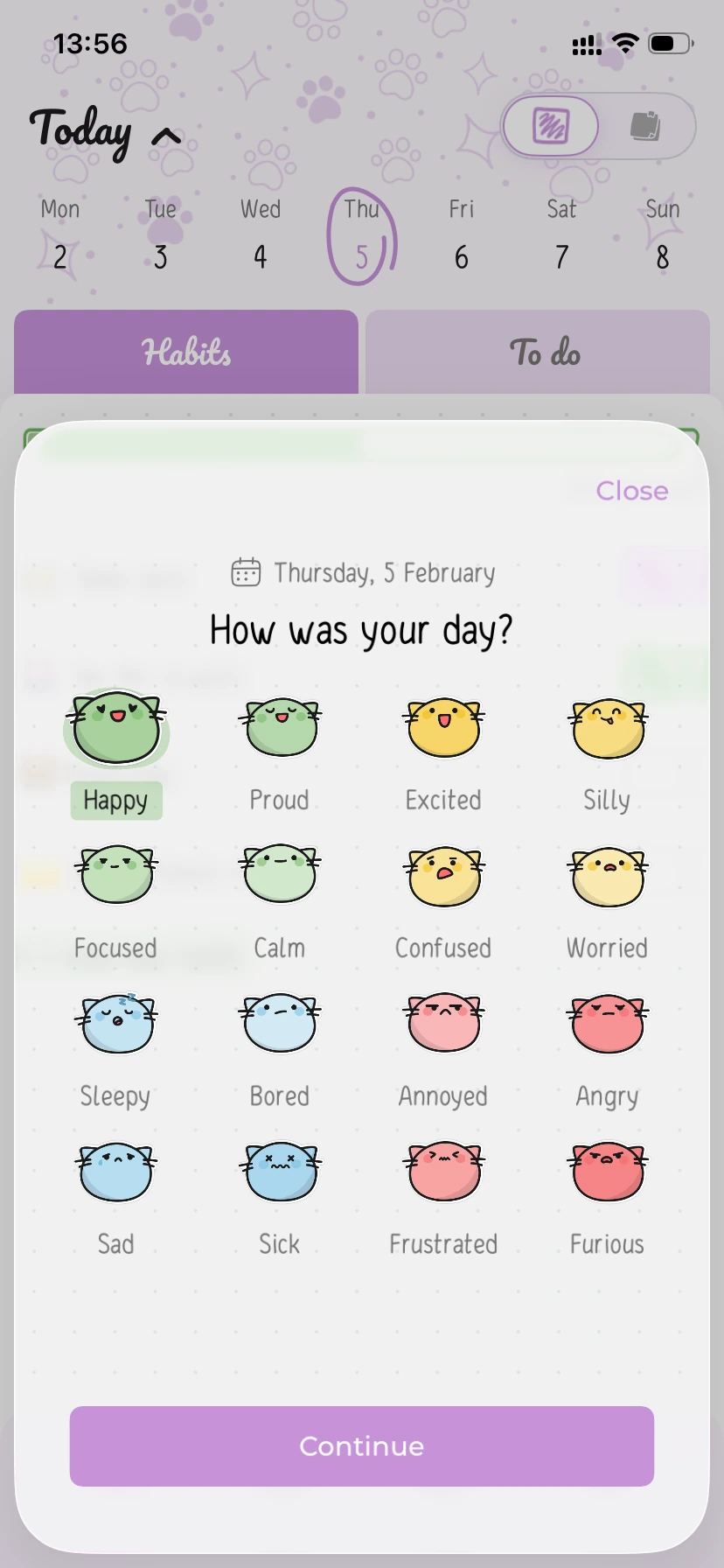
Before you change anything, it helps to understand where you are right now. Rating your mood is a quick way to name your current state so your next step actually matches the day you are living.
A good flow looks like this:
- Track your mood once a day, ideally around the same time.
- Pick the mood that matches your day, do not overthink it.
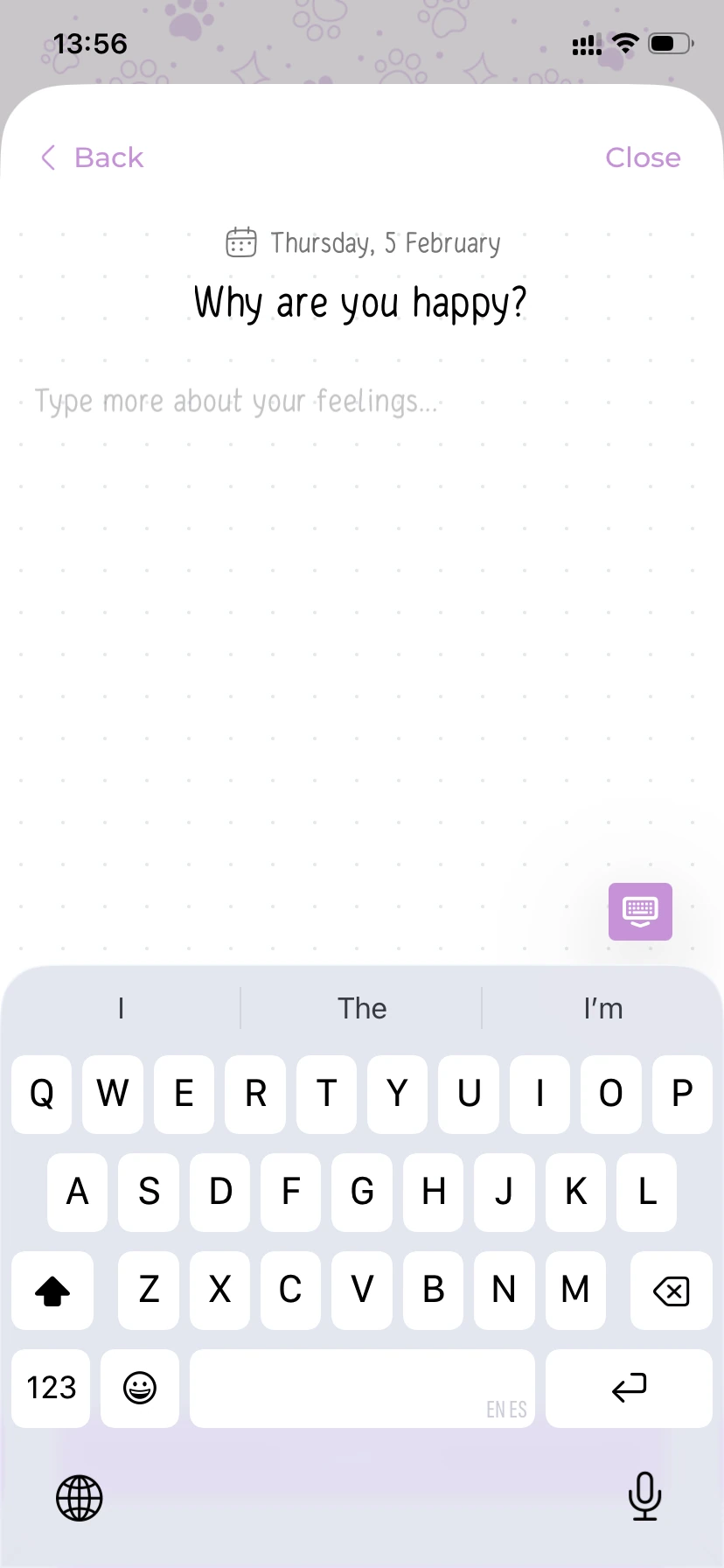
- Add a short note only when it will give you useful context later.
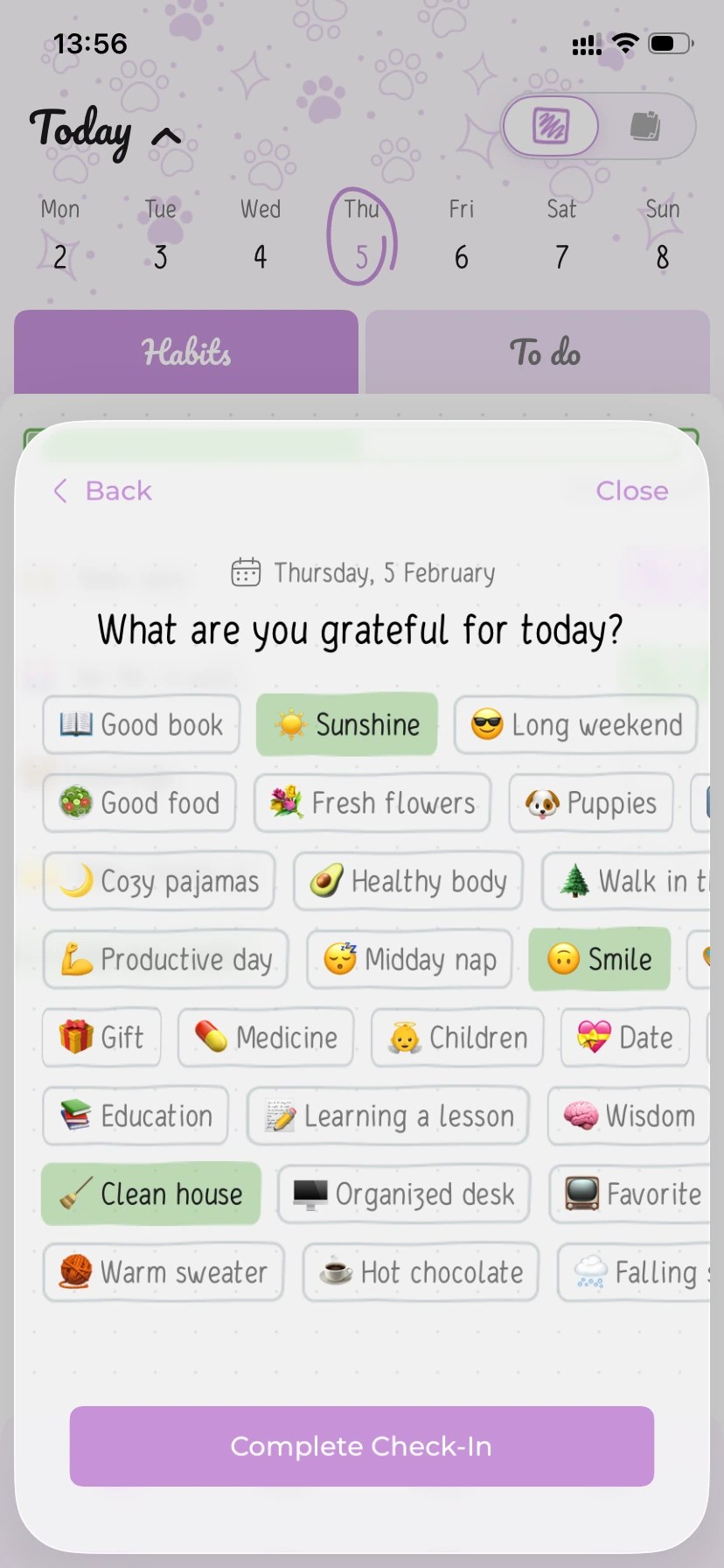
After you check in, use the time of day as your guide:
- In the morning, choose one habit from the list to support your state today.
- In the evening, choose a small habit to close the day, for example reflection or reading before sleep.
- If you have low energy or limited time, just do the check in and add a short note. Even simple tracking helps you understand what conditions create your best days.
The key idea is that you do not need a perfect plan. You need one next step that fits how you feel right now. Let us start with the first scenario: you already feel good and want to keep that momentum.
Good mood: Happy, Proud, Focused, Calm
When you feel good, your goal is to maintain that mood and use it well. Do not spend all your energy at once. Use this state to create small wins that make tomorrow easier.
A good mood is a reliable starting point. Habits feel easier, choices become more intentional, and your brain learns faster. With the right approach you get two advantages at once:
- You make today even better without overloading yourself.
- You prepare tomorrow so there is less negativity, and good days are easier to repeat.
Choose habits that keep your energy in a workable range, or that make later steps easier in advance. You are building a system for the long term, not doing a one time sprint.
Morning and first half of the day
This is the best time to build a habit. The goal is to protect your energy and focus so your good mood stays stable through the day.
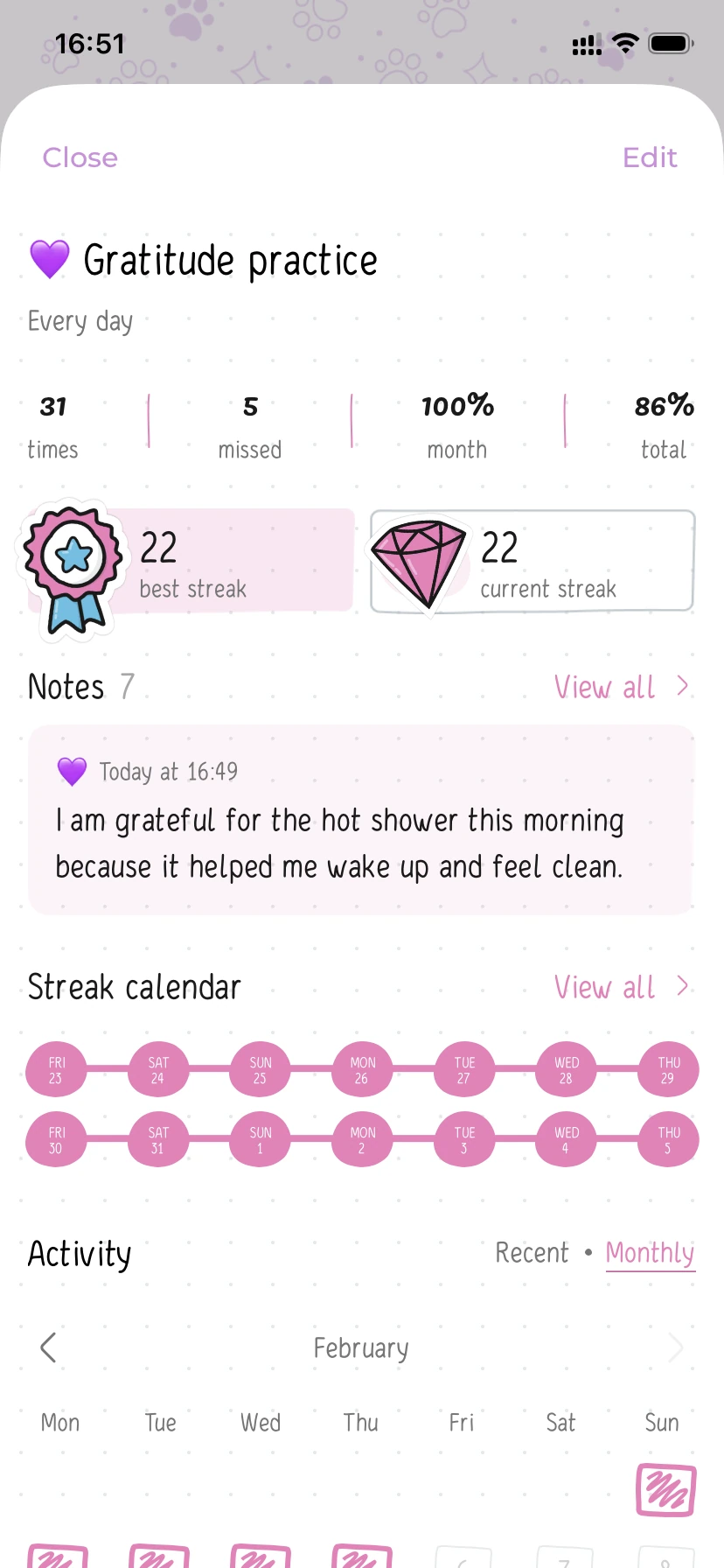
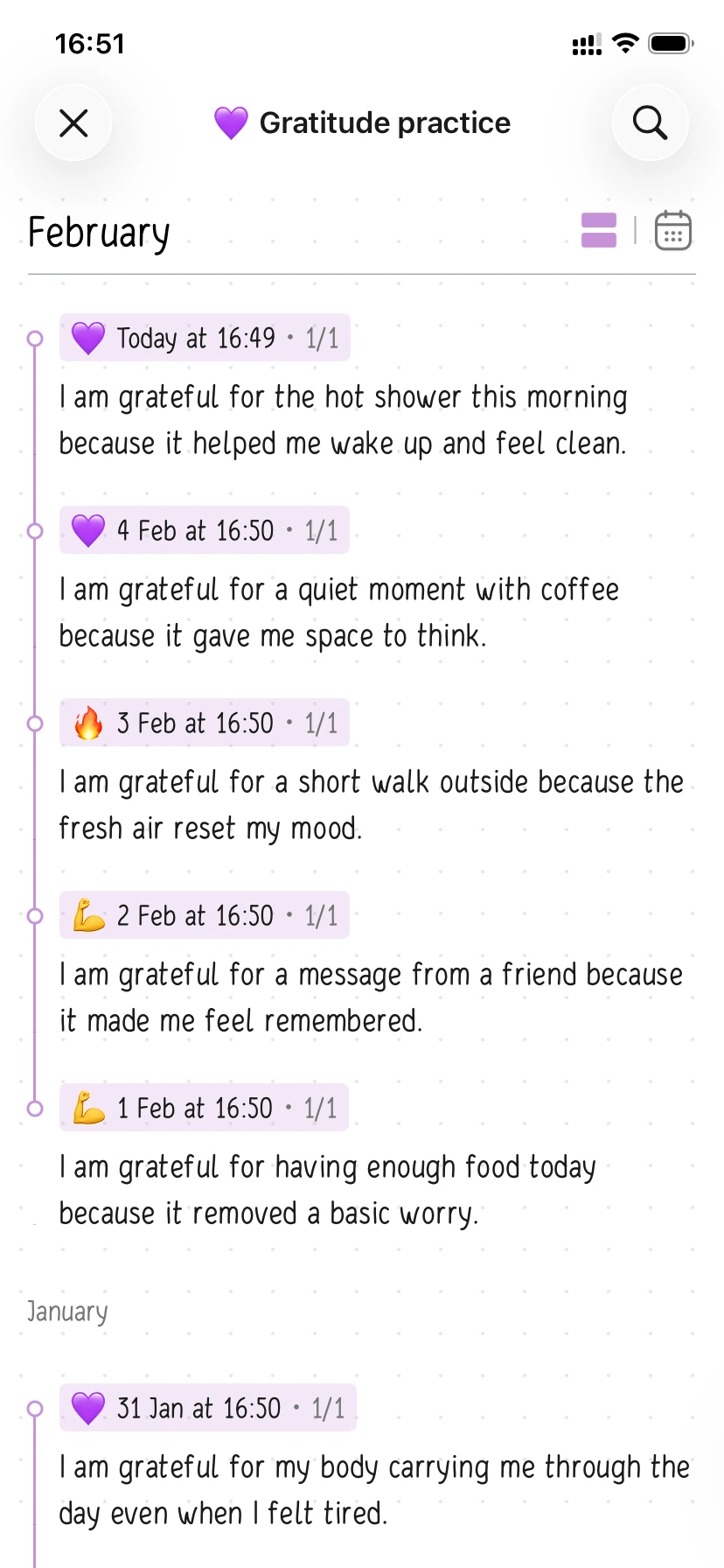
Late day and evening
This is a good time for a small habit that matches your mood and finishes easily. The goal is to end the day with a clear outcome, not a long checklist.
Night
At night, do not add a complex habit. Convert your good mood into clarity and close the loop.
Check-in in the evening is about closing the day, not starting a new stage.
When your mood is good, you can think in systems. You choose one habit, do it once, and save future effort.
But what about restless moods. Sometimes you feel energetic but scattered, or your thoughts jump from one thing to another. In that state, the goal is not to invest. The goal is to stabilize and give your attention a simple anchor that makes focus easier.
Restless mood: Excited, Silly, Confused, Worried
Restlessness often comes with inner motion. Sometimes it is just extra positive energy with no clear outlet. Sometimes it is anxious energy that pulls you into repeating loops. The mistake is choosing a habit that adds more stimulation or more decisions.
The goal is to add a fixation point. This is not about removing emotions. It is about lowering the background noise and directing scattered energy into a clear result.
Morning and first half of the day
In the first half of the day, an anxious background is best reduced by a habit that removes the first layer of chaos. A small support often stops your thoughts from spiraling early.
Late day and evening
Later in the day, the best choice is a grounding habit with a clear finish. You need something that closes the cycle and tells your body you are safe.
Night
At night, anxious thoughts get louder and the brain often needs a sense of completion. If you keep stimulating the mind, it will keep producing new ideas and new worries. Choose a habit that frees space in your head and calms you before sleep.
Restlessness does not mean you are failing. Usually it is energy that needs a clear direction.
After you learn to stabilize a restless state, the next challenge is often a drop in mood, when the problem is not too much activity, but too little.
Low mood: Sleepy, Bored, Sad, Sick
A mood drop can weaken motivation. Everything takes more effort. The trap is choosing habits with a high entry barrier, then making things worse with self criticism when you cannot follow through.
The goal is to reduce the starting load. Pick habits that you can stick with even when you're feeling low on energy. A small action isn't a failure. It's a strategy that can be repeated.
Morning and first half of the day
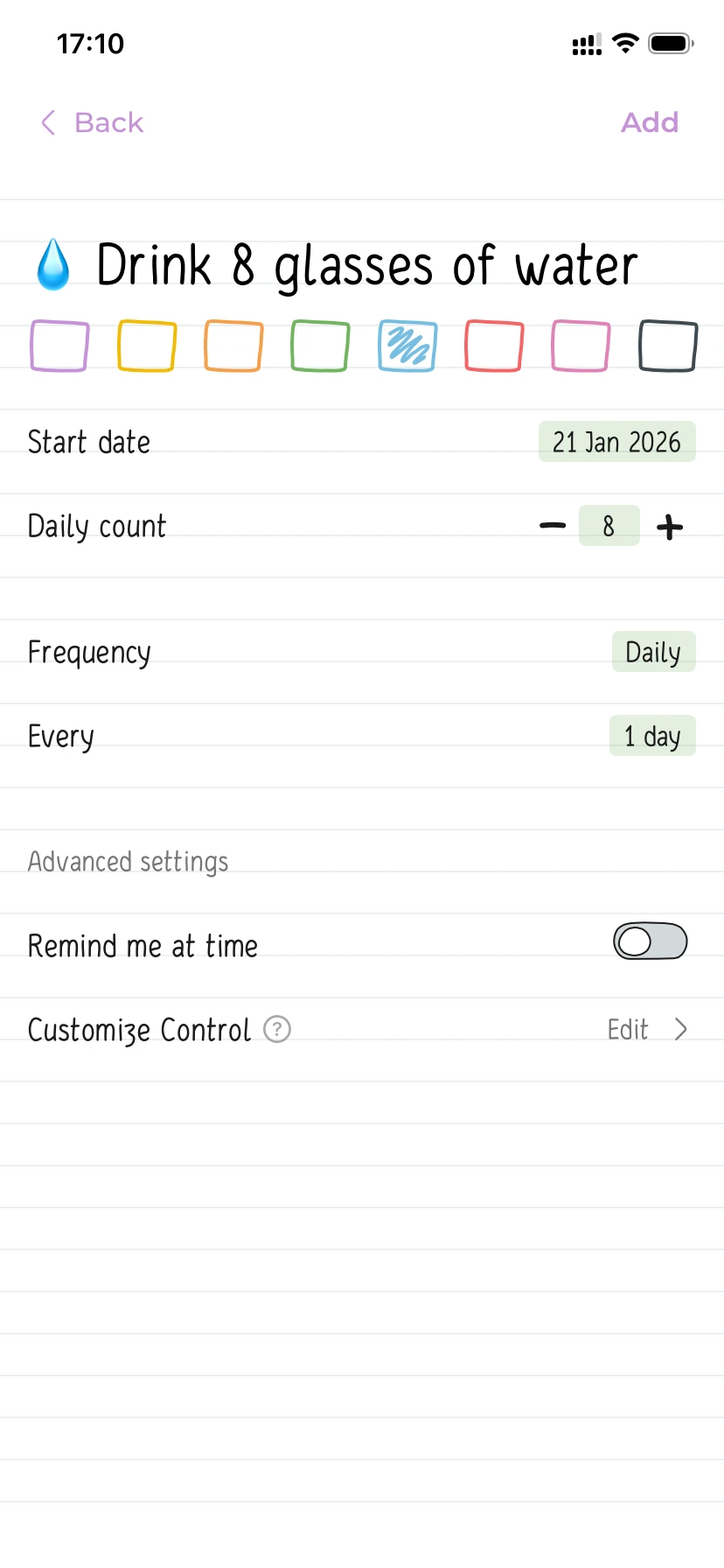
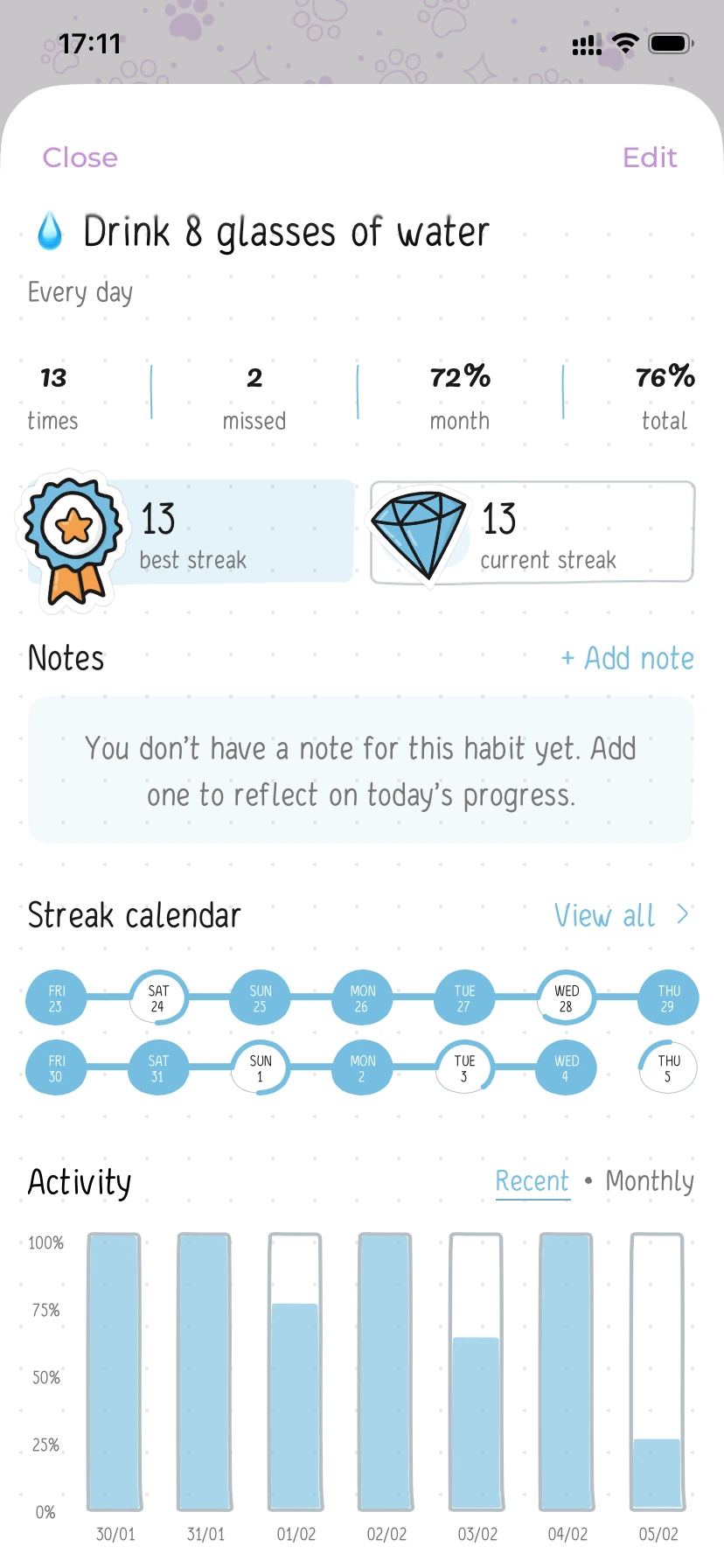
In the first half of the day, the most helpful habit is one that supports your body. When your body lacks care, it quickly shows up in your mood.
Late day and evening
In the second half of the day, choose a calm habit for comfort, without trying to prove anything. You need stability and a sense of support, not achievement.
Night
At night, you can end up in a bad mood and slip into an inner dialogue. Do not try to fix it with planning. Choose habits that soothe you and make tomorrow smoother.
On low mood days, being steady means keeping the rhythm without pressing the gas pedal.
When you can handle low moods, another pattern often shows up: irritation. This is not about low energy or distraction. It is about inner friction, spikes, and sharp reactions.
Irritated mood: Annoyed, Angry, Frustrated, Furious
Irritated moods often hint that some resource is blocked. There is not enough time, boundaries are not protected, expectations press down, or energy is running low. When irritation is high, the wrong habit makes it worse, especially if it adds stimulation or reasons for conflict.
The goal here is to create space to choose between feeling and acting. You need one simple habit that lowers tension and helps you respond more thoughtfully.
Morning and first half of the day
In the first half of the day, irritation often shows up as impatience. The best habit is one that removes urgency and reduces the stream of incoming signals.
Late day and evening
In the second half of the day, irritation often makes your thoughts stick to one thing. You replay the situation again and again. Choose a habit that helps you exhale and change your environment.
Night
At night, it is better to close irritation instead of carrying it into sleep. If you fall asleep in anger, the brain keeps replaying the situation while the body rests. Choose habits that capture what happened and help you let go.
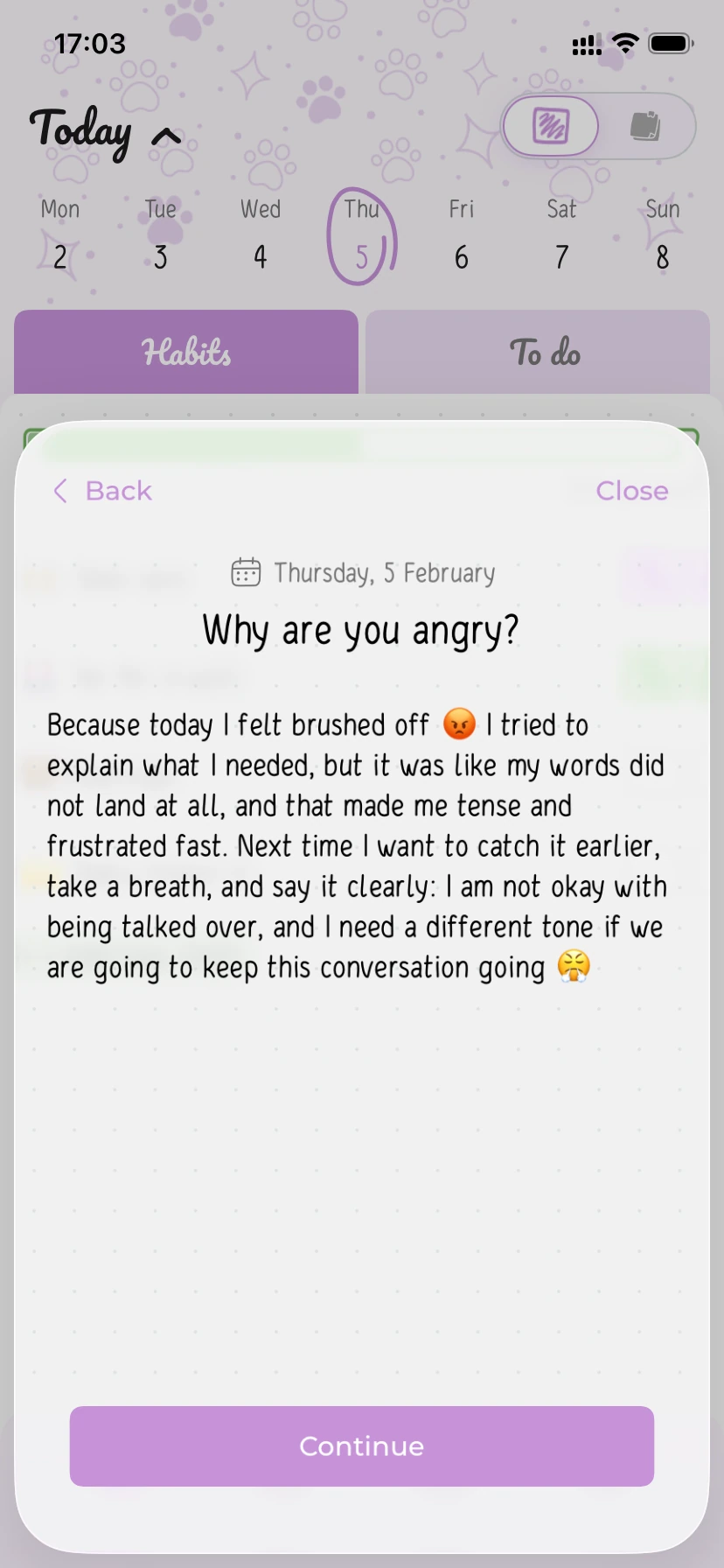
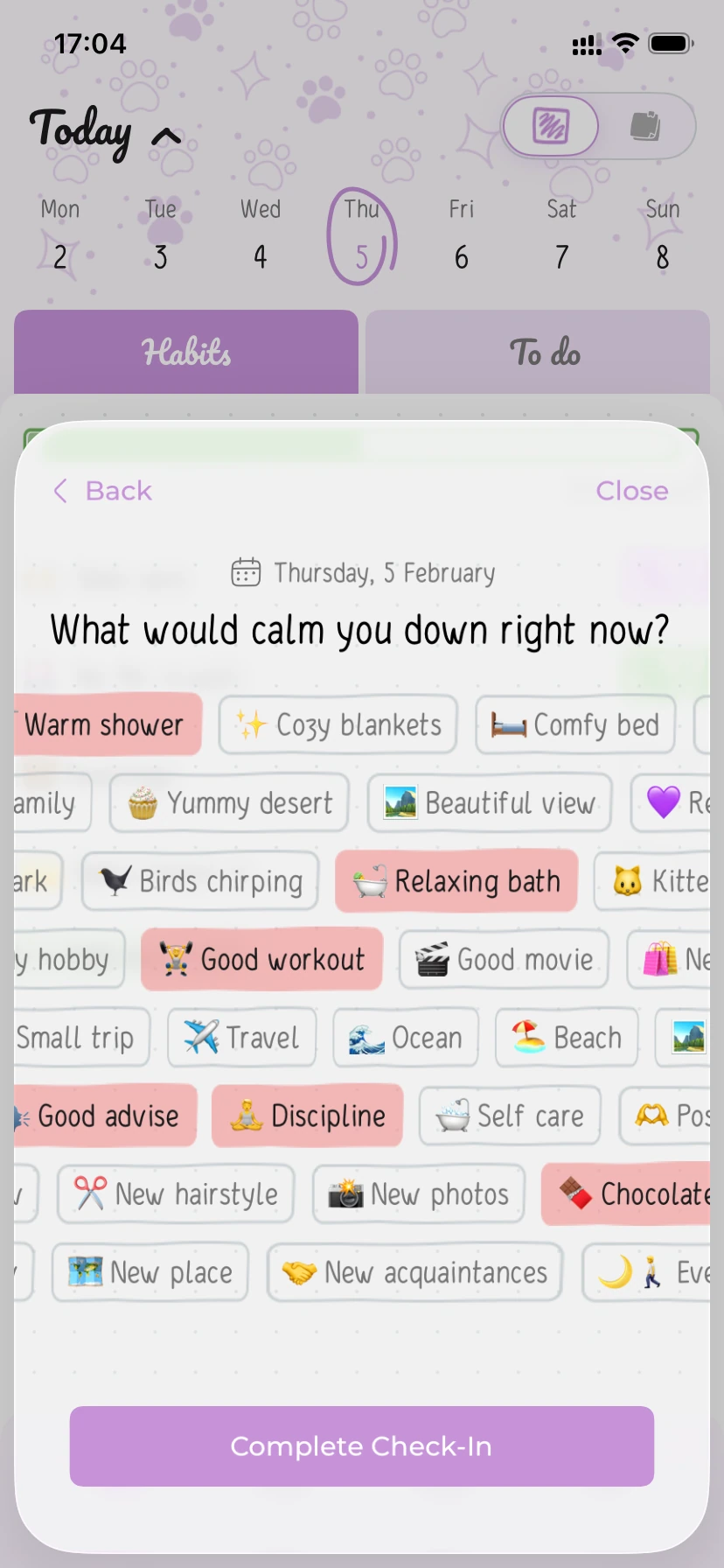
Annoyed is an indicator that the system is overloaded. It is as if it is reminding you that it is time to stop, recover, or rebuild.
Bonus: how to choose the right habit
You do not need to hold all of this in your head. Use the check in as a decision guide to stay flexible and not act blindly.
Choose a habit based on what your mood needs most right now, not on what an ideal routine should look like. In practice, every mood maps to one of four needs:
Invest when you feel good
When you are in a good state, it is easier to act. Use it and choose a habit with a longer effect that makes tomorrow better. Let it support energy, clarify thoughts, or create a repeatable advantage.Focus when you feel restless
Your mind is active but not collected. Choose a habit that reduces external noise and gives one clear outcome so attention stops jumping.Support when you are at zero
If motivation is close to zero, make the start as easy as possible. Choose a habit that restores resources to the body or adds comfort without requiring complex effort.Reset when you feel irritated
The feeling gets sharp and reactions get fast. Choose a habit that creates a pause between emotion and reaction so you can return to calm and act more consciously.
If you are not sure what to choose, ask yourself one question:
Do I need to speed up, keep the pace, recover, or cool down?
If you feel good
Choose a habit with a long term effect that works for the future and lowers the load on tomorrow.If you feel restless
Choose a habit that reduces overload and gives your brain a clear sense of completion.If you feel bad
Choose a supportive habit that makes the start easier and helps the body recover.If you feel irritated
Choose a habit that helps you cool down and gives time for a thoughtful response.
The rule is simple: do not choose a habit that assumes you have resources or a mood you do not have right now.
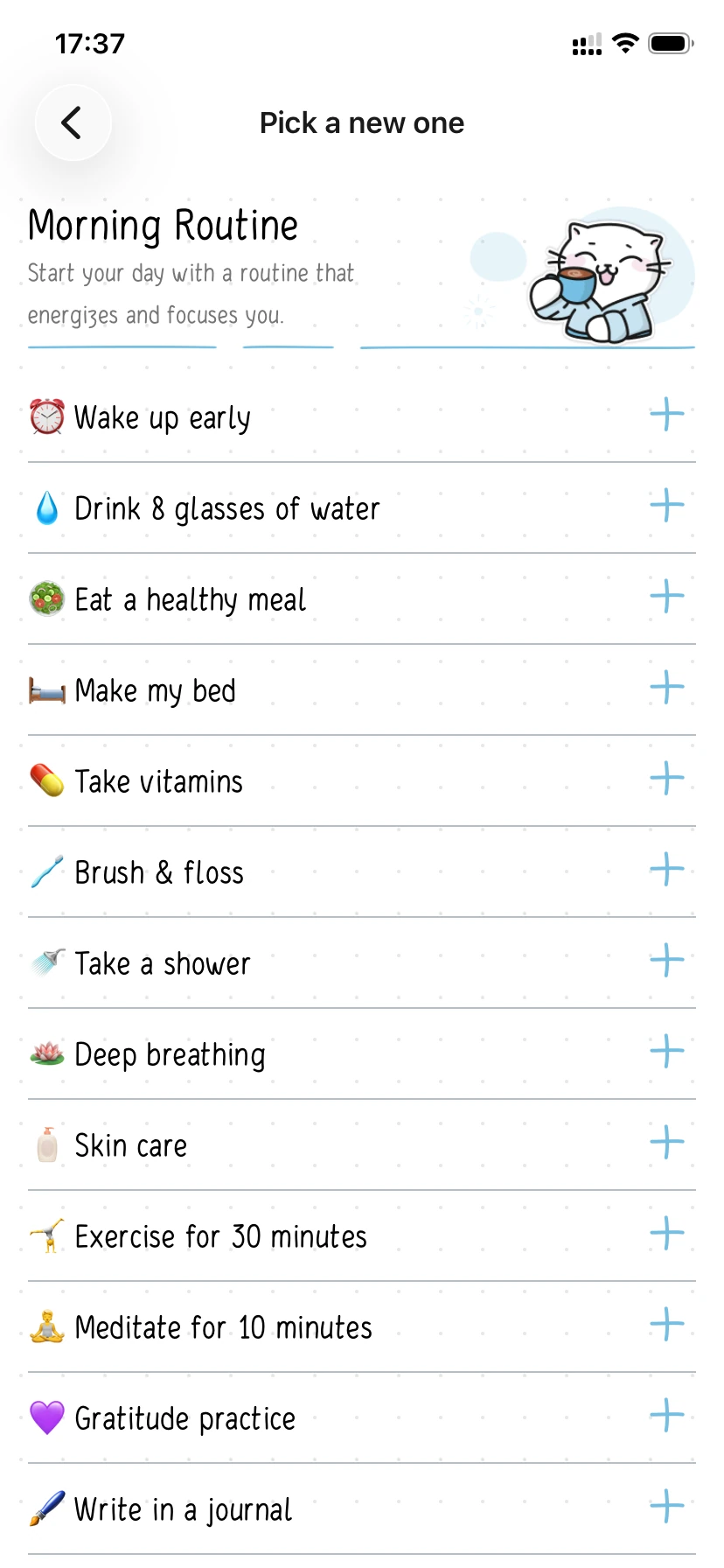
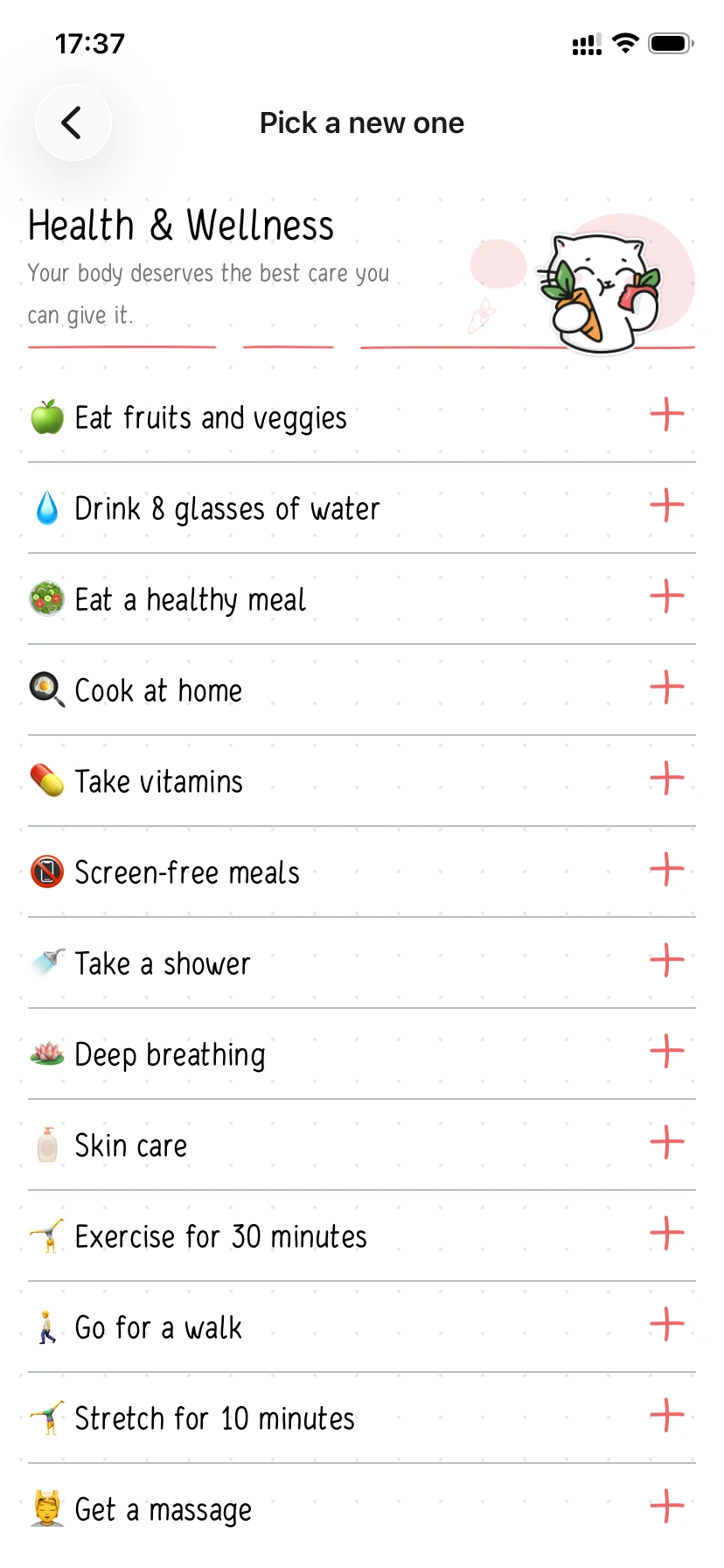
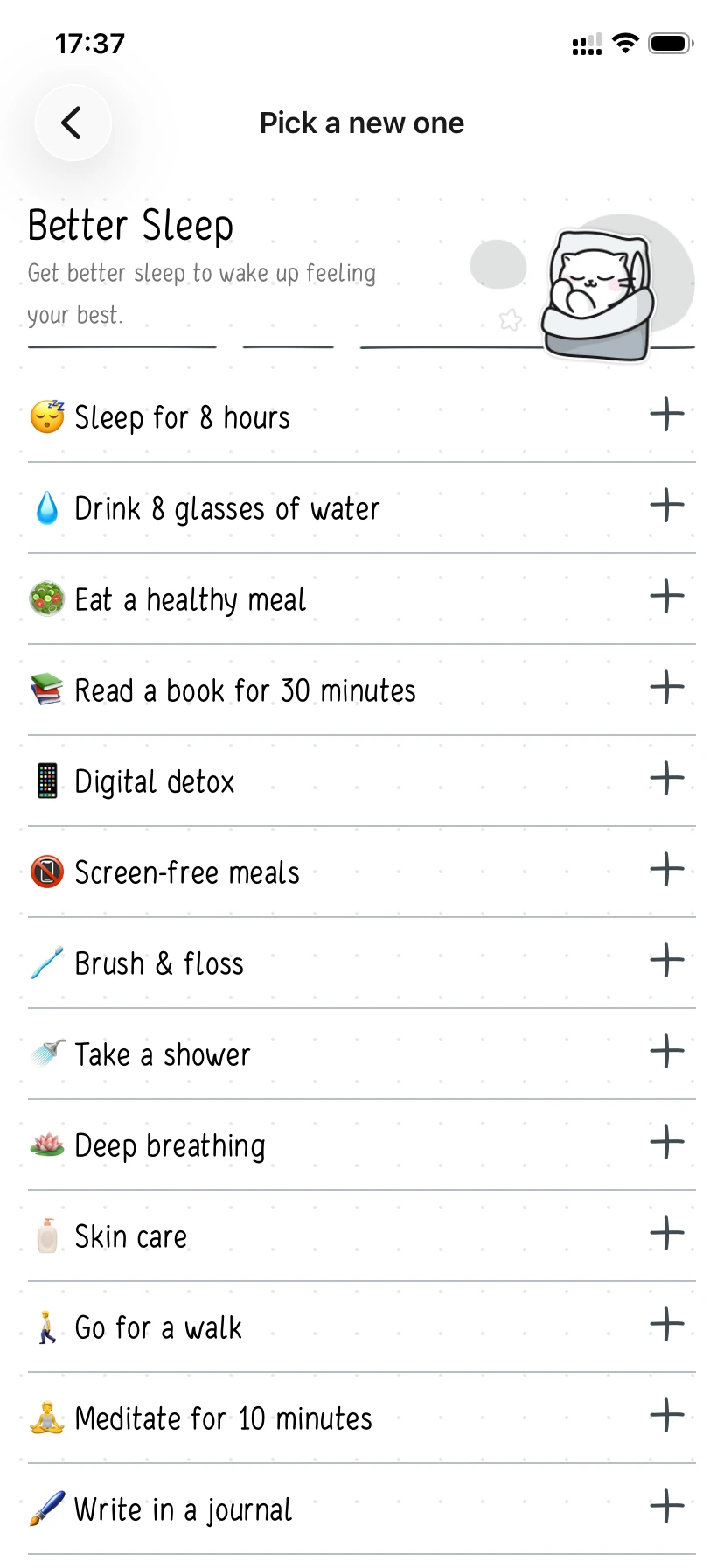
When you listen to your mood in advance, you stop forcing yourself to do the same routine in every version of yourself. You replace inner resistance with a small next step that fits today. Over time, this creates two important effects:
- Habits are easier to start because the required effort at the beginning matches your state.
- Progress is easier to repeat because you understand what actually works for you.
You do not need to fix your mood to move forward. You need one action that is easy enough to finish and accurate enough to match your current state.