A Routine You Can Maintain With Hizo: A Simple Habit System

Routines usually break for predictable reasons, not because you lack discipline. Common causes are too many habits, unclear goals, tasks stuck in your head, and no feedback loop. That is not failure. It is a signal that your system needs less friction and more clarity.
With Hizo, you can build a simple routine you can repeat any time: a small habit list, a clear to do list, quick notes, and a lightweight way to see patterns and improve.
This guide is built around 5 simple practices you can use year round:
The goal is to make the next step obvious, and make consistency feel realistic again.
Reduce your daily habit list
When your habit list gets long, you can feel overwhelmed before you even start, which is a great way to accidentally quit a routine you actually care about. Having a shorter list isn't a downgrade. It's a strategy that helps you stick with your routine on normal days, not just on high-energy days.
A good starting point is to pick 2 or 3 habits that you can do pretty much every day, even if your day is crazy. Once that baseline feels stable, you can add more. Until then, you're laying the foundation.
How to practice
First, choose a few habits that are clear and you can repeat. If a habit feels vague, make it smaller and more specific so you can complete it without having to think too much about it.
✅ Good habits that usually work well:
- Drink a glass of water after waking up
- Walk for 10 minutes
- Read 5 pages
- Stretch for 2 minutes
- Put dishes in the sink before bed
🚫 Avoid habits like this (they feel motivating, but are too vague to repeat):
- Be healthier
- Work harder
- Be productive
- Fix sleep
How to keep it realistic
If you keep missing a habit, think of it as a design problem. Maybe the goal is too big, the timing is off, or you need a better cue.
In Hizo, you can change the habit rules without deleting it and starting from zero. For example, if you notice you often skip a habit, open Edit Habit and adjust the Frequency to a schedule that actually fits your life right now. Try a different cadence, test it for a few days, and keep iterating until it feels easy to repeat.
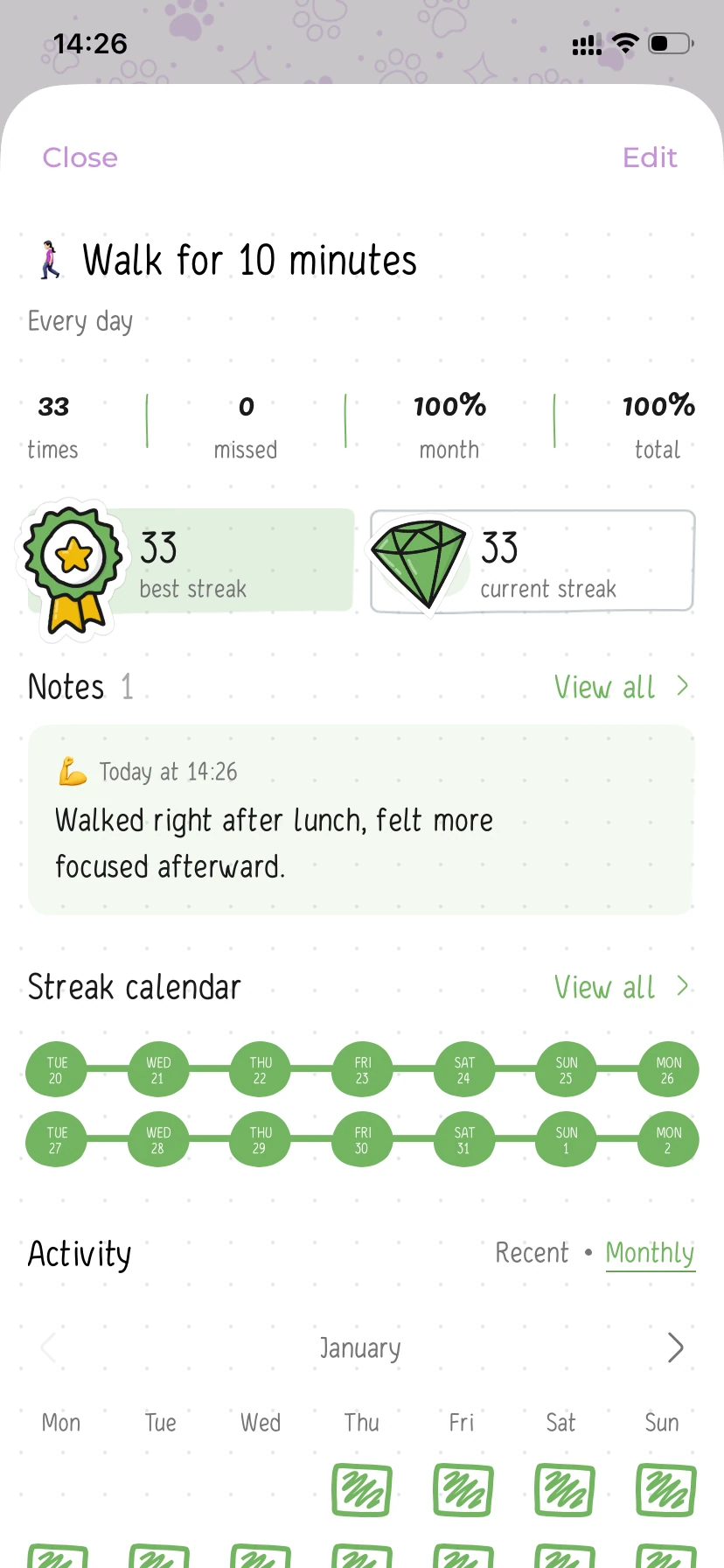
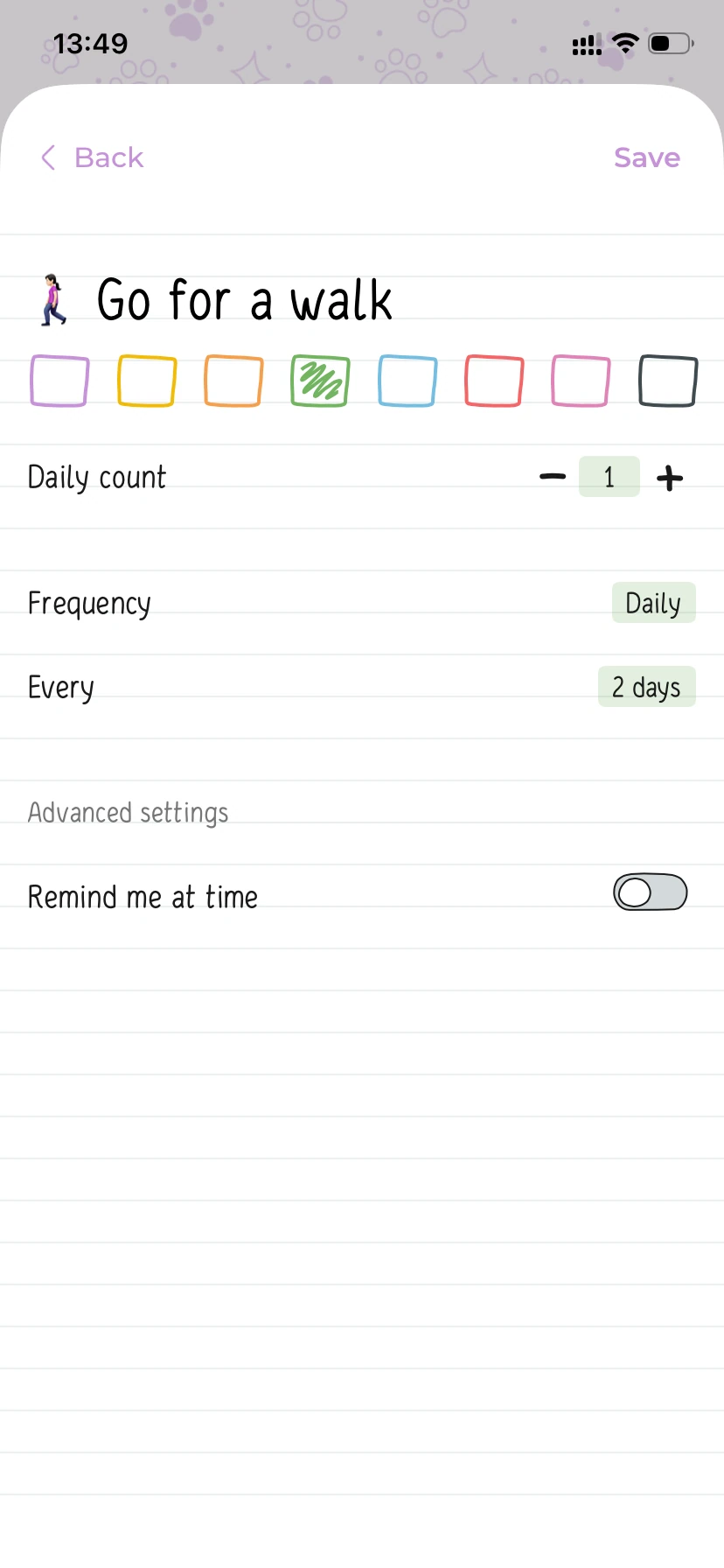
Here's a simple rule that works: add only one new habit at a time, and give yourself a few days to see if the routine still feels easy.
Keep a simple to do list
To do lists fail when they become a second job. You add tasks all day, the list grows faster than you can complete it, and after a while you stop trusting it. That means your brain goes back to carrying everything again.
The solution is simple: treat your daily list like a short runway, not a storage room. Your goal should be clarity, not volume.
How to practice
Jot down any tasks that come up right away so they don't just keep bouncing around in your head. Then, pick 3 priorities for today because most days have a few important things and a lot of things that don't matter as much.
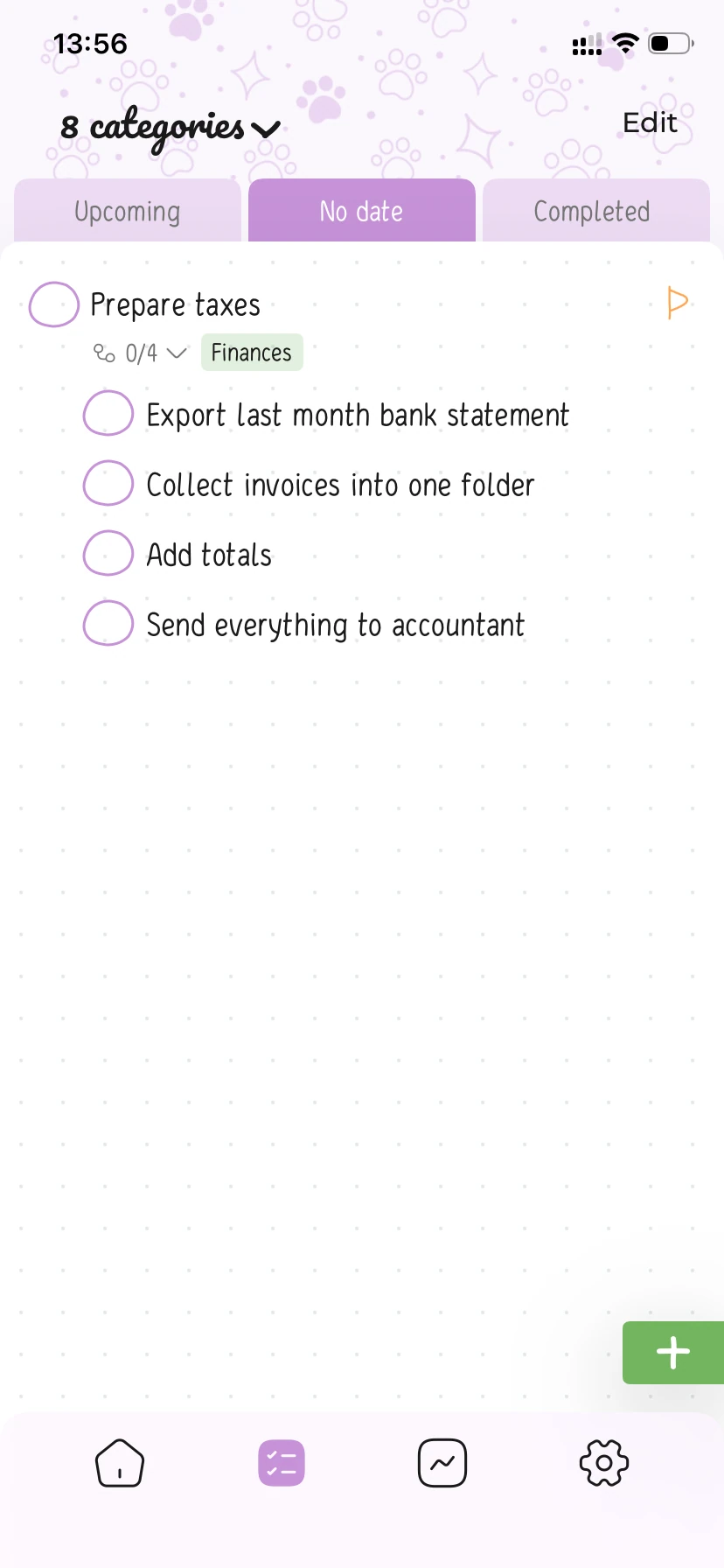
When a task feels overwhelming, do not leave it sitting on your list as one huge, vague item. In Hizo you can turn it into a clear project by adding subtasks, so you always know what the next action is, even when your energy is low. For example:
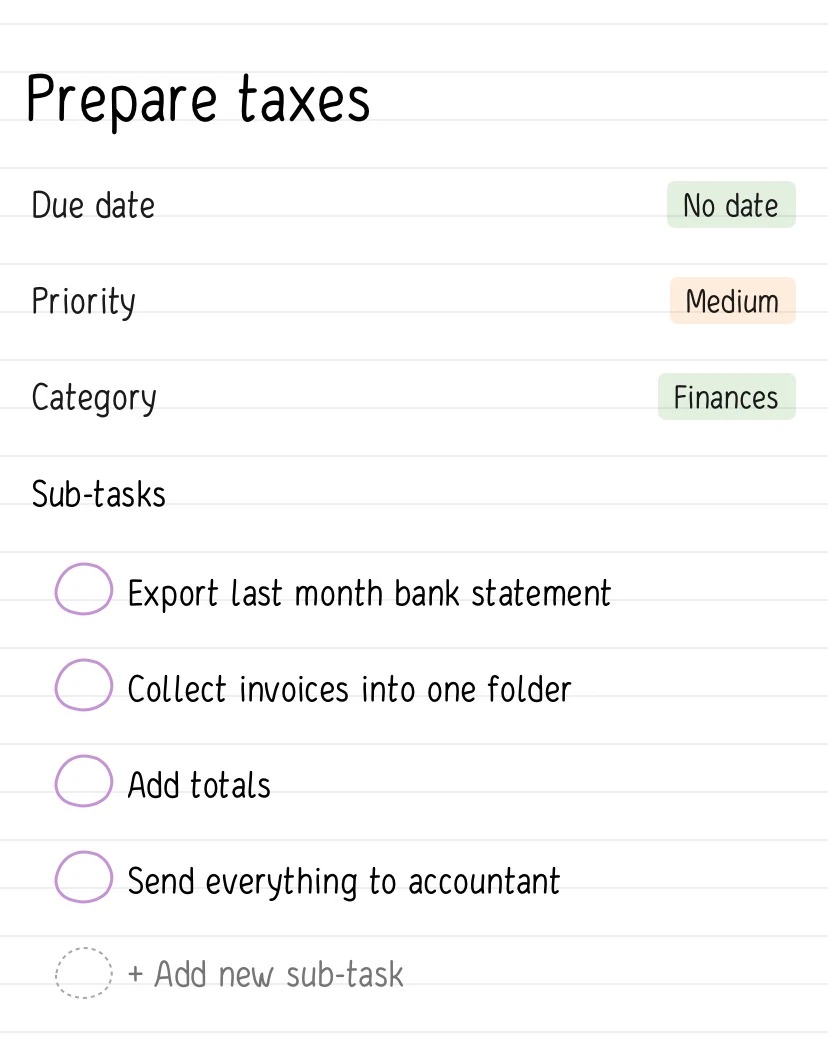
This does two useful things:
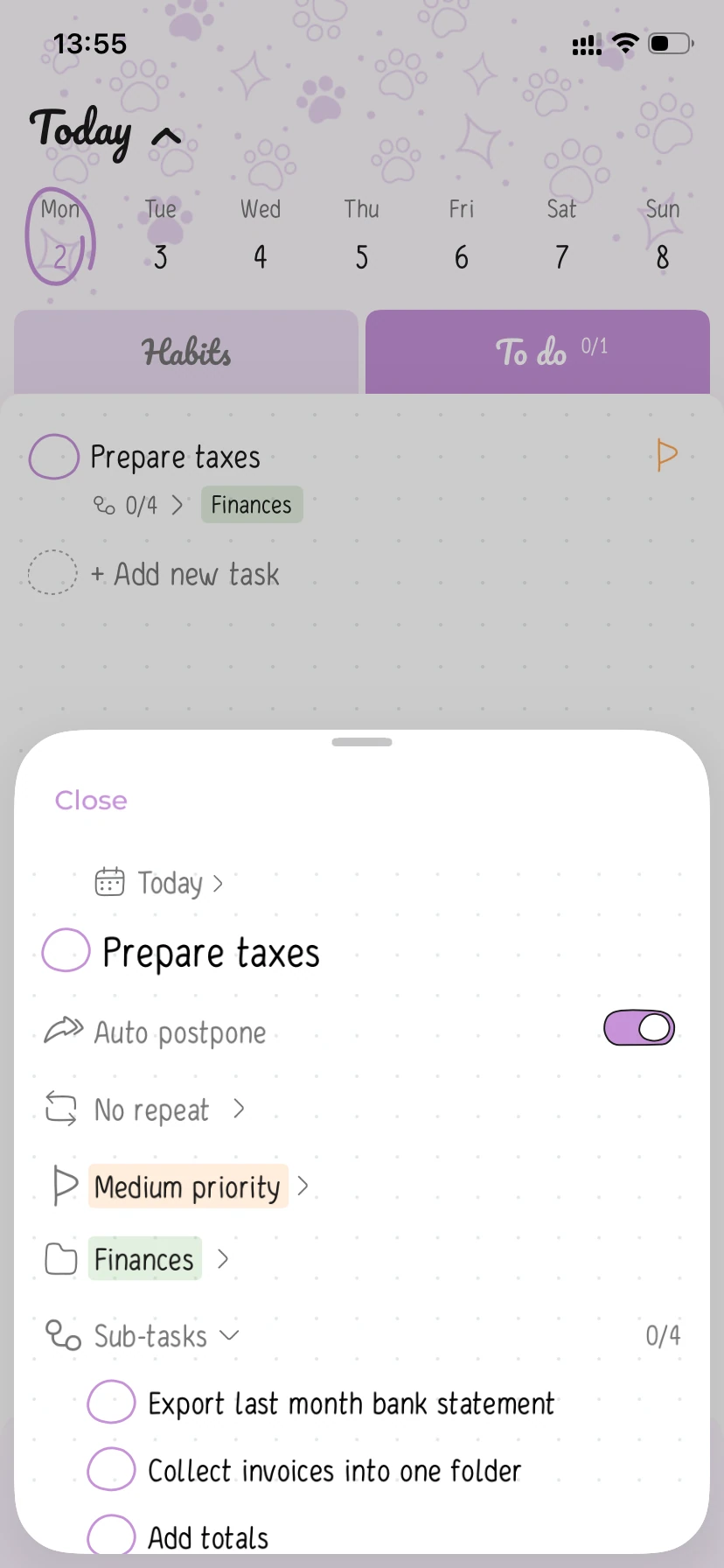
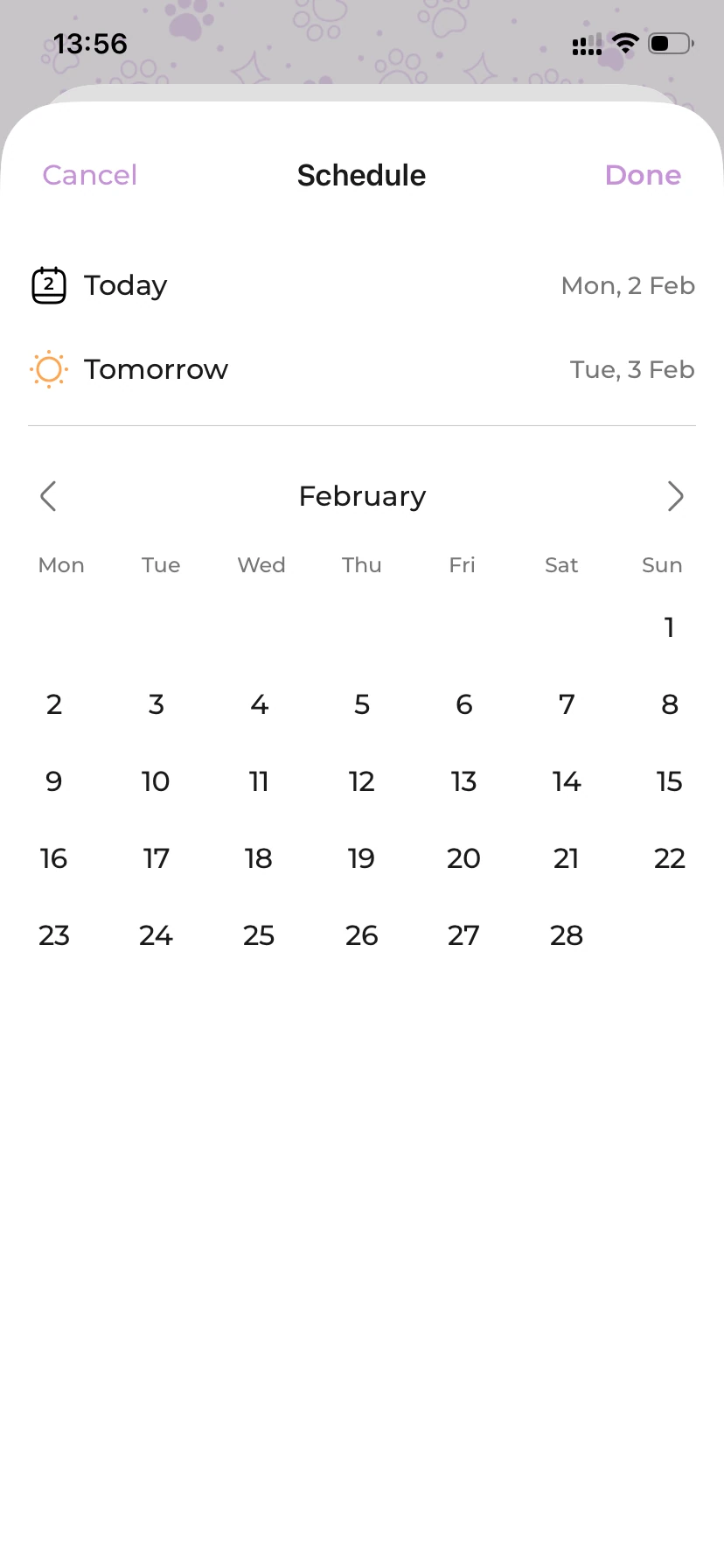
First, you can set the main task to auto postpone, so it will move forward day by day until you finally tap it as done. That way it stays visible without forcing you to pick the perfect date in advance.
Second, you can keep bigger tasks in your No date list. When you plan your day and choose your top 3 priorities, you can quickly scroll that No date list and move only a few tasks to Today, instead of flooding your day with everything at once.
This approach keeps your list calm, keeps big goals moving, and prevents tasks from turning into background stress.
End of day reset that takes one minute
At the end of the day, do a quick review. Mark what is done, delete what you do not need, and rewrite anything unclear into a real next step. You are not trying to be perfect. You are trying to make tomorrow easier.
Note your thoughts each day
Numbers show what happened, but notes explain why it happened. This is the difference between "I missed the habit again" and "I miss it when I start too late" or "I hit it easily when I prep in advance."
If you're going to add any extra info beyond checking boxes, make it notes. They take seconds, and they turn your routine into a learning loop.
How to practice
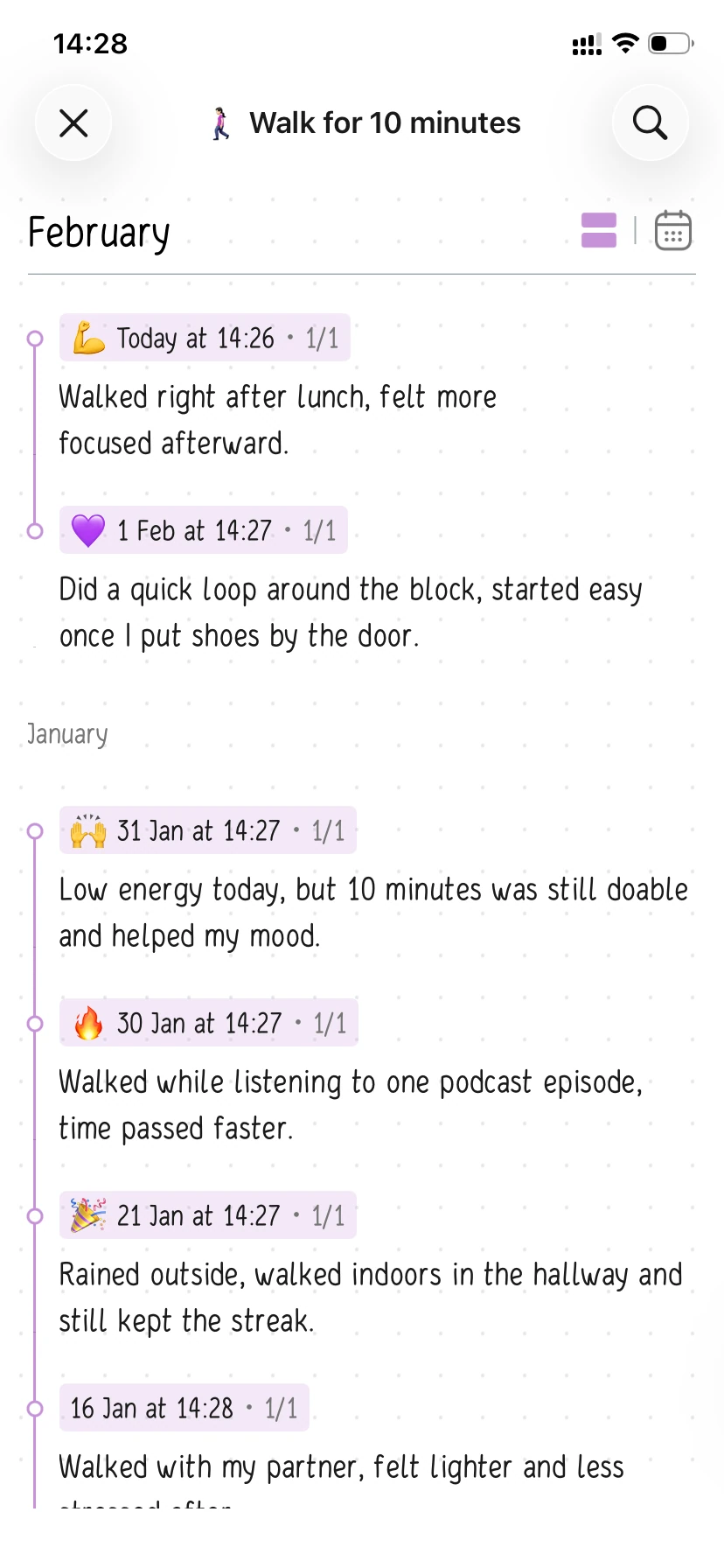
Keep your notes short, because the best note is the one you'll still be writing an ordinary day. One line is all you need, and it should feel more like leaving yourself a little hint than writing a journal entry.
Here's a simple way to think about it: habits tell you what you did, notes tell you why it worked. After a week or two, you'll start to see patterns in those lines, like what time of day is easiest, what triggers you to start, and what usually gets in the way.
Good note prompts:
- What made this easy today
- What made it hard today
- What is the smallest change I can try tomorrow
- What did I do right before I started
- What did I feel right after finishing
✨ Examples you can copy ✨
- Walk was easy because my shoes were ready by the door
- I did the habit right after coffee, so it felt automatic
- It was easier because I kept the goal small and simple
- Reading was hard because I started too late and kept checking my phone
- I skipped it because I came home tired and had no clear plan
- The habit felt too big today, so I avoided starting
- Tomorrow I will do 2 minutes instead of 10, just to keep the streak
- I will prepare everything in advance, like clothes or a bottle of water
- I will move the habit earlier in the day, before work messages start
Here's a helpful trick: tag your notes with a quick keyword so you can spot trends faster later. For example, you could say energy, timing, stress, environment, sleep, social, or focus. You don't have to be consistent, just choose something that makes the note easier to scan when you review it.
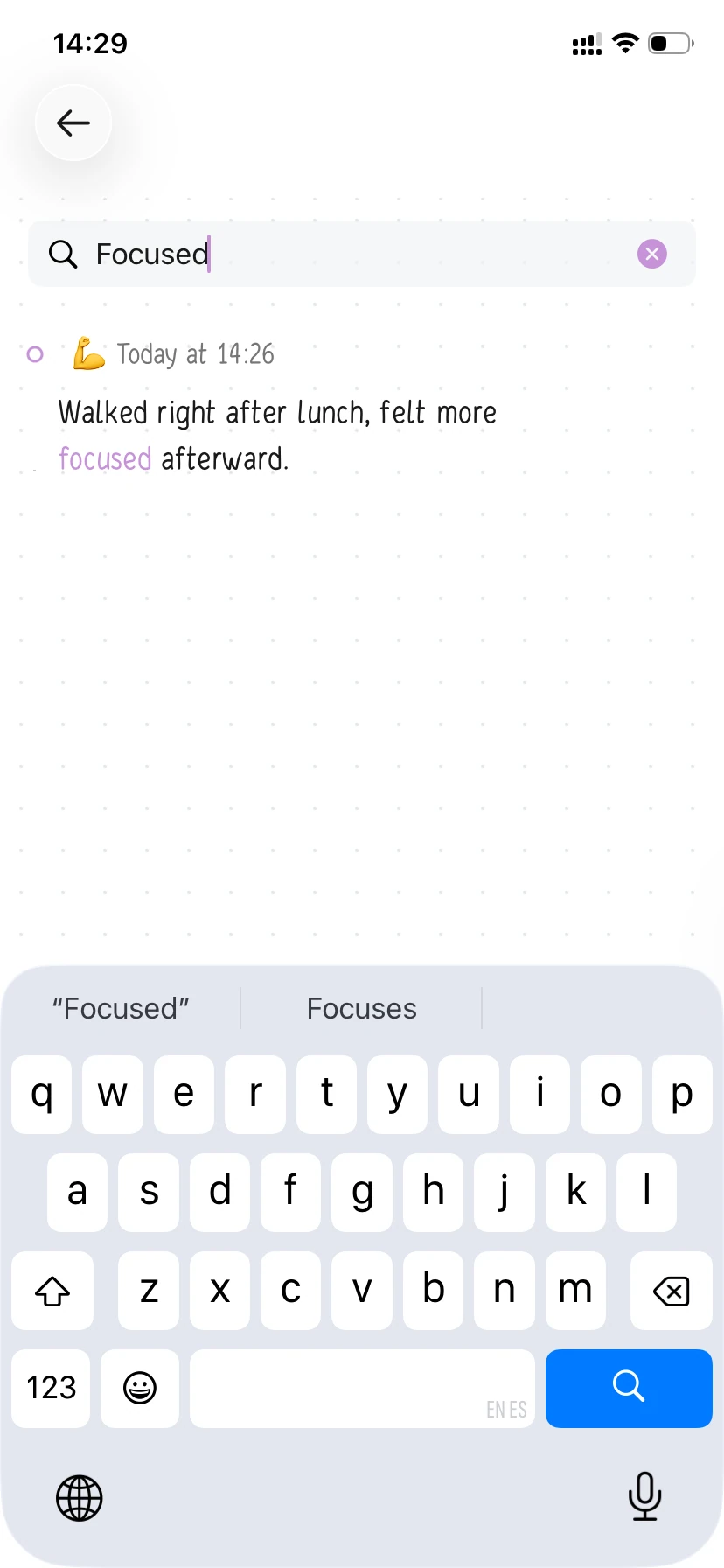
Weekly pattern check
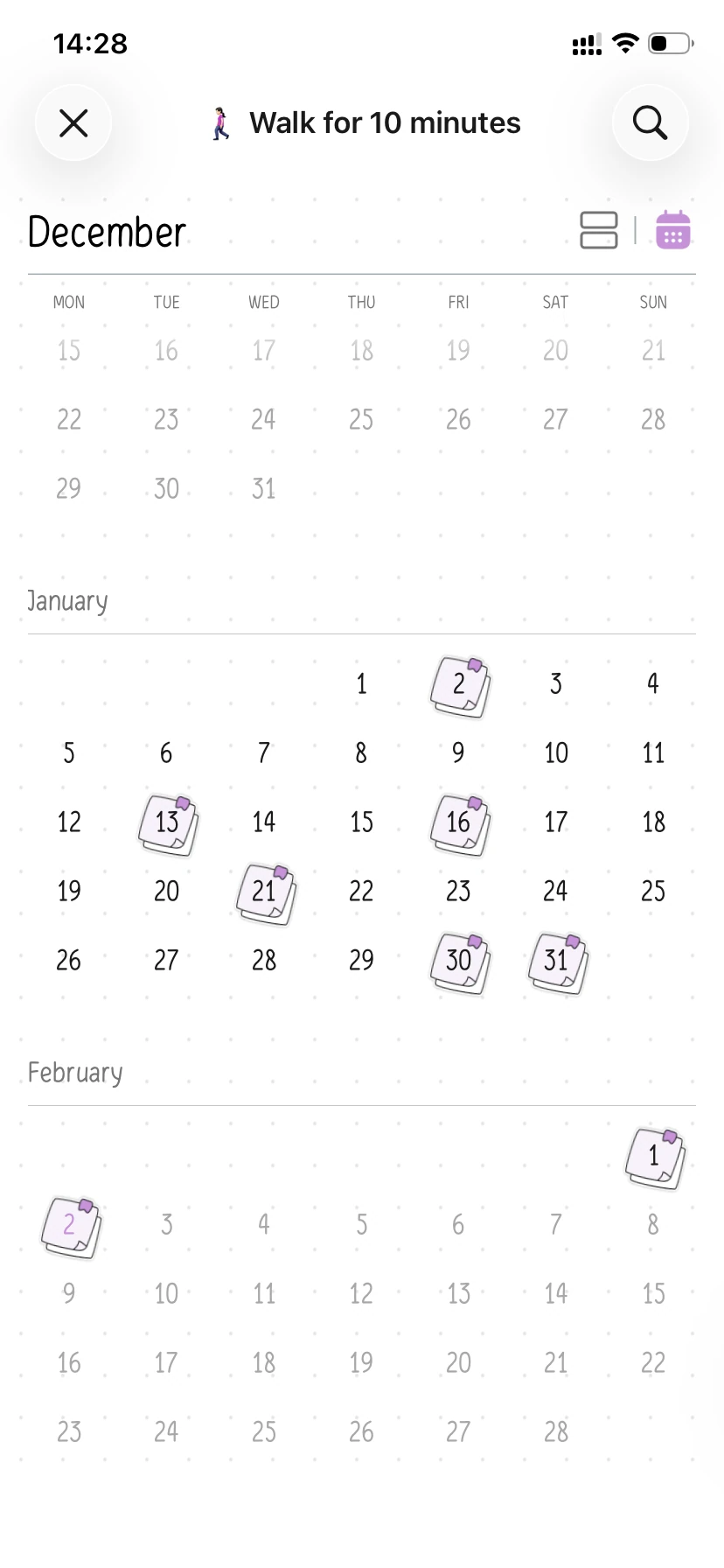
Once a week, check your notes and see if there are any repeats. You're basically debugging your routine, and the bugs are usually consistent.
Look for patterns like:
- Times of day that work best and when things tend to fall apart
- Triggers that help you start like a reminder, a specific place, or a cue after another habit
- Obstacles that repeat like low energy, meetings, travel, or late evenings
- Habits that need a smaller goal because they are too ambitious for a normal day
Then make one small adjustment for the next week based on what you found. For example, move the habit to a better time, add a clearer cue, remove one source of friction, or reduce the goal until it becomes repeatable.
Reflect on your day every evening
Mood tracking isn't about judging your day. It's all about understanding how your routine affects you and how your life affects your routine.
When you check in once a day, you start noticing patterns that are hard to see otherwise, like "I feel better on days I walk" or "I crash when I overload my task list" or "I do everything later when I skip breakfast."
How to practice
Keep it simple and make it sustainable, because the whole point of an evening check in is that you actually do it on normal days.
A good flow looks like this:
- Check in once in the evening, ideally around the same time
- Pick the mood that matches your day, without overthinking it
- Add a short note only when it gives you useful context later
✨ Examples of mood notes ✨
- Good focus after a morning walk and an early start
- Low energy after too much screen time and a late lunch
- Better day when I planned fewer tasks and finished them earlier
- Stress dropped after I cleared the list before dinner
- Mood improved after I took a real break, not just scrolling
- Felt calm because I kept my habits small and didn’t rush
Think of the note as a little label for your day. One sentence is all you need, and it should answer a practical question like "What influenced my mood today" or "What should I repeat or avoid tomorrow."
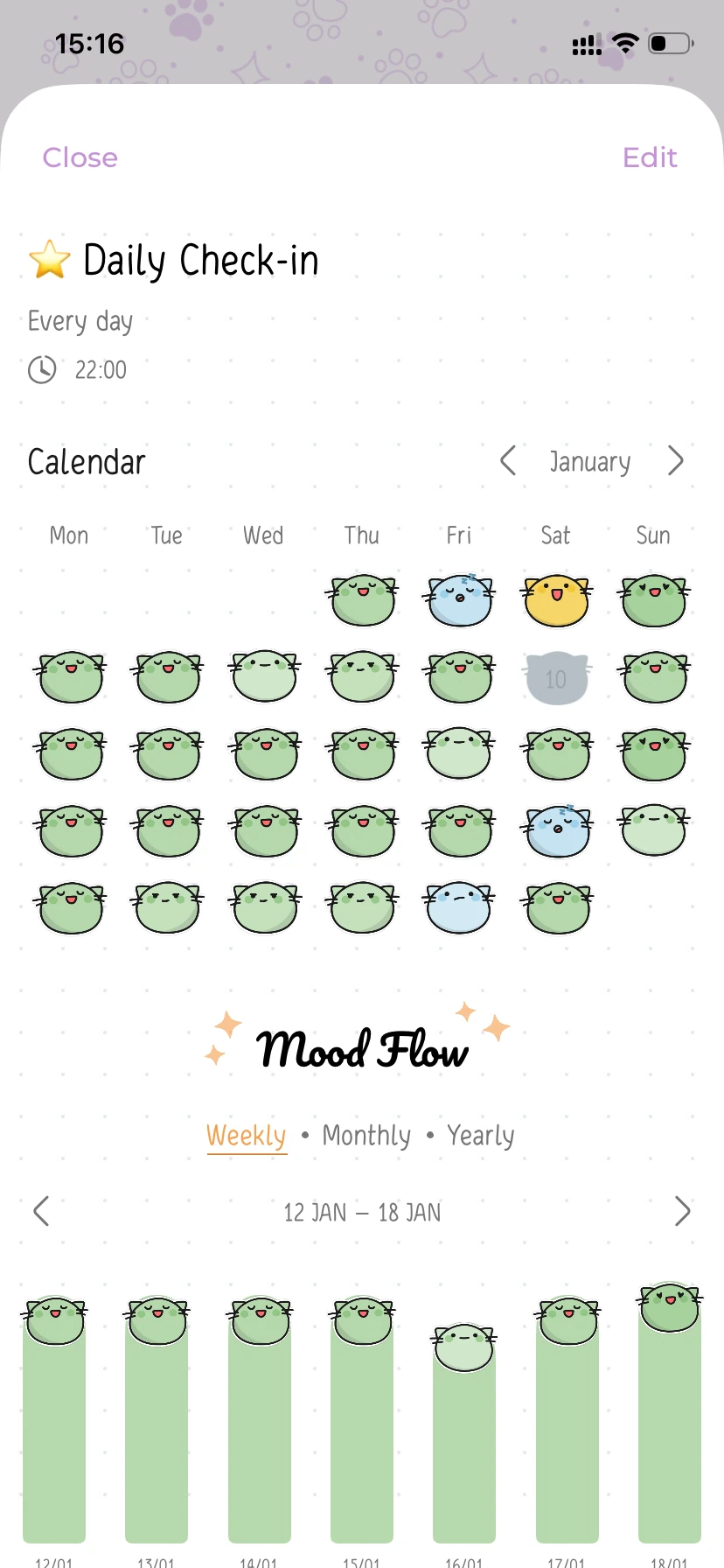
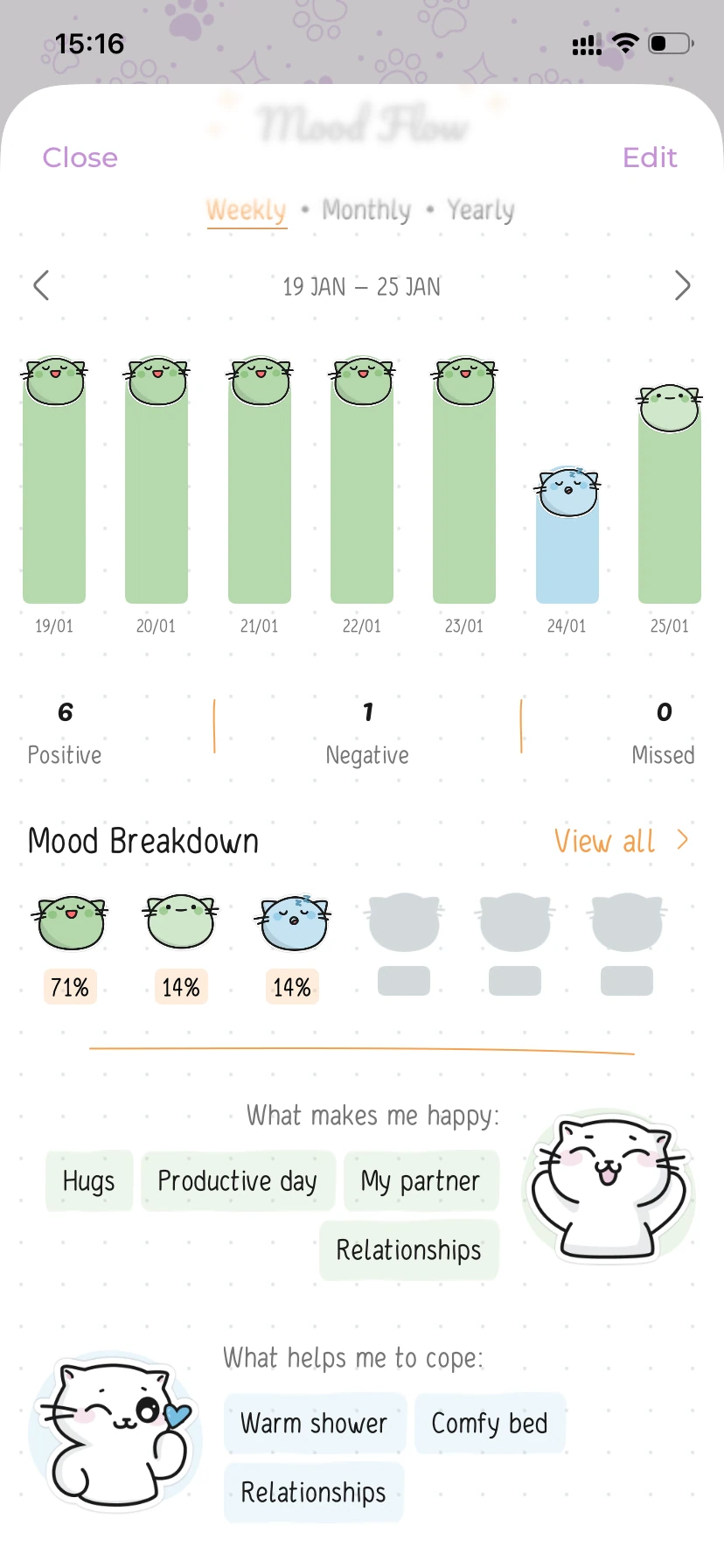
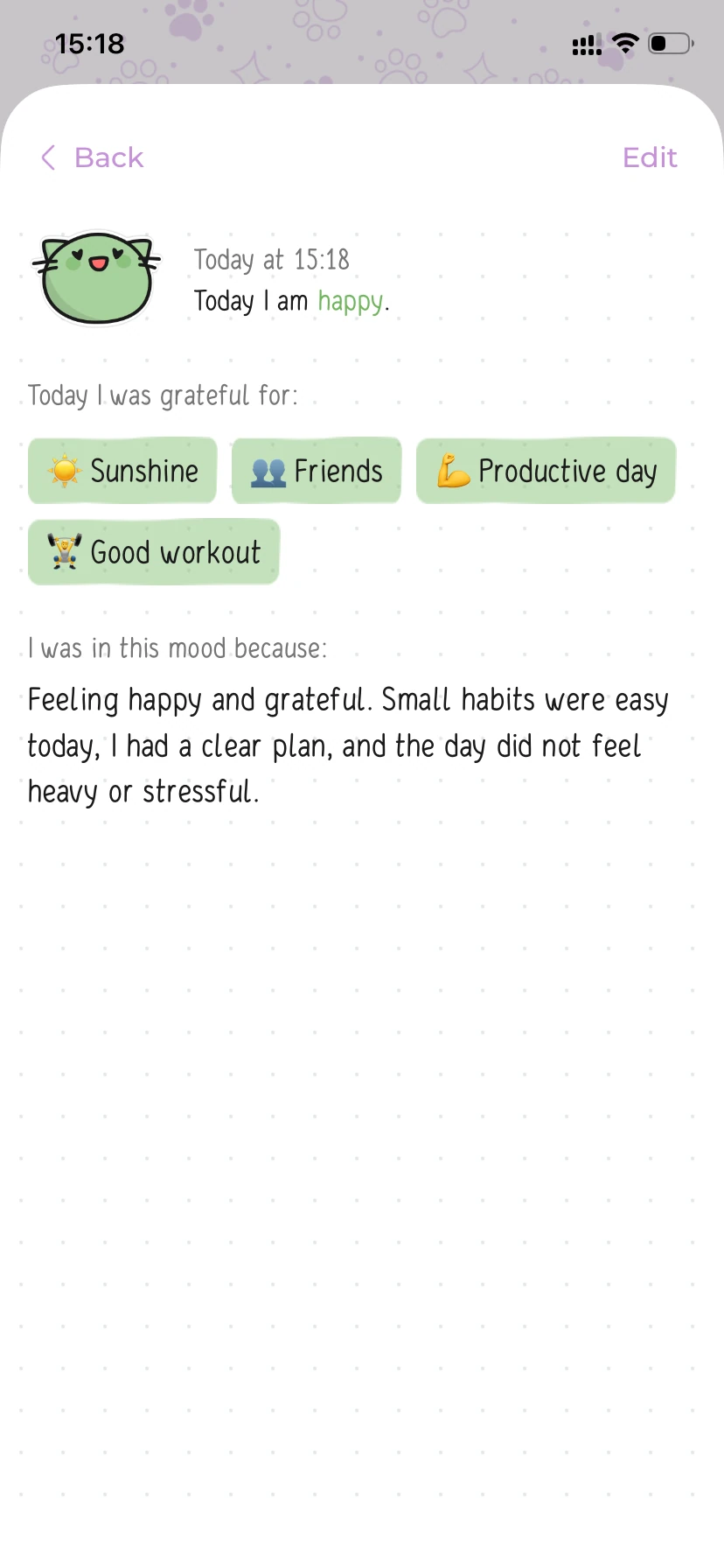
After a few days, you will start seeing patterns without trying. After a couple of weeks, you will usually notice something obvious, like certain habits improving your mood, certain days of the week being more draining, or your task list getting too heavy. That is the useful part, because you can adjust your routine based on what actually happens in your life, not based on what you wish your life looked like.
If you want an easy weekly check, open your mood history and ask:
- What helped on my best days?
- What kept showing up on my harder days?
- What is one small change I can test next week?
Stay consistent with friends
Accountability works best when it's light. You don't need a huge group, daily meetings, or competition. Having one friend is enough to make routines feel more real, especially when motivation is low.
A simple way to use friends in Hizo is to keep it lightweight and consistent, not intense. You add a friend once, and then you only check in a couple of times a week, which is enough to stay connected without turning it into a project.
How to practice
In Hizo, you can quickly see each other weekly progress, perfect days, and current streaks. When you notice that your friend is doing well, or when their streak breaks and they are trying to restart, you can send a motivation card. These are ready to use cards, so you are not forced to write a message from scratch. You just pick one of the four options and send it, which makes support feel easy and natural.
A simple routine that works in real life:
- Add a friend in Hizo
- Check progress once or twice a week, for example mid week and on the weekend
- Send a motivation card when you see a good streak, a perfect day, or a comeback after a missed day
- If you want more structure, do a small shared challenge for a week or two
✨Shared challenge ideas that stay realistic ✨
- 10 minute walk daily
- No phone in bed
- Read 5 pages daily
- One glass of water after waking
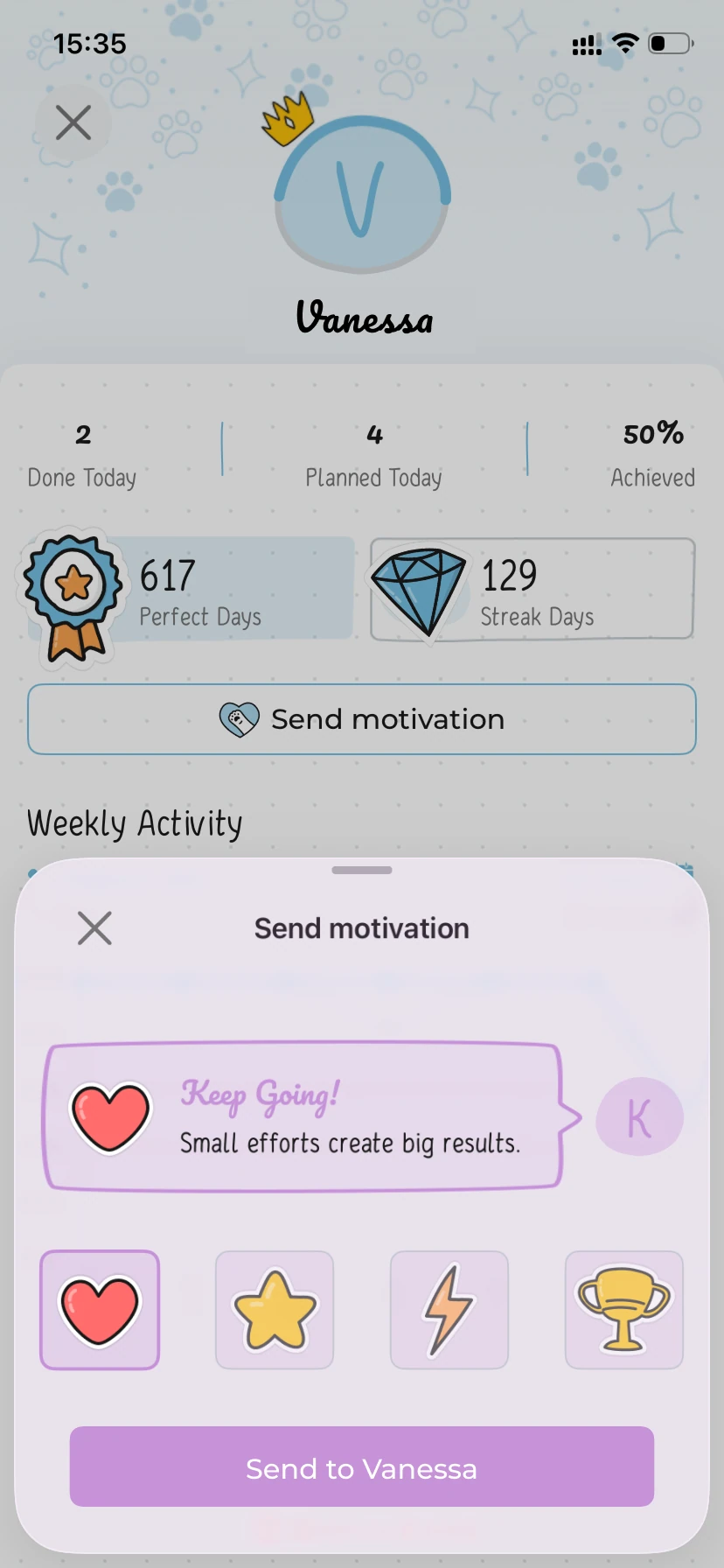
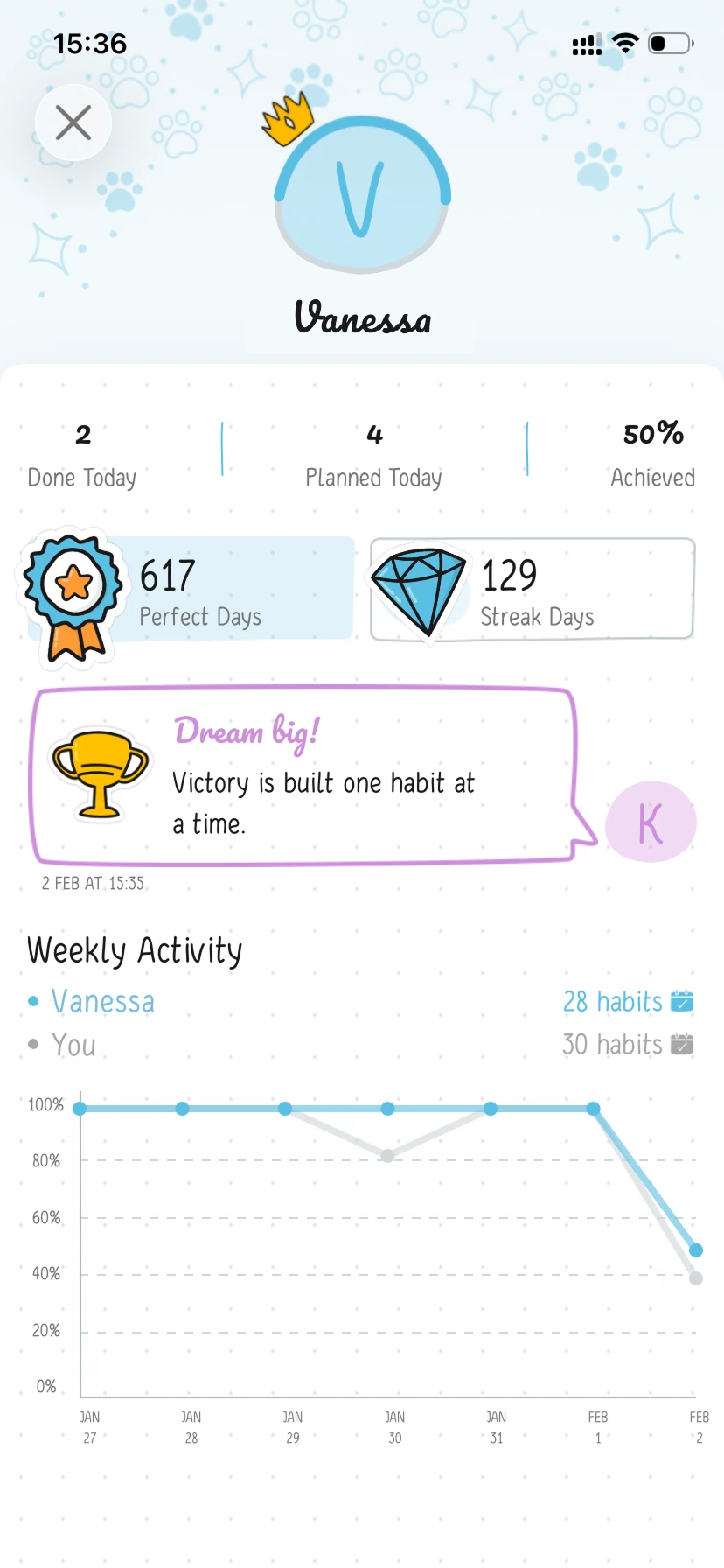
A good rule: friends should reduce pressure, not add it. If someone misses a day, the goal is helping them restart tomorrow, not making them feel bad today.
A repeatable routine template you can always return to
When you want to simplify and get back on track, use this as your default setup:
- Choose 2 to 3 core habits
- Keep a short daily task list with 3 priorities
- Add one line notes when something feels easy or hard
- Do a quick mood check in the evening
- Use friends for light accountability if you want it
This is the kind of routine you can run on any random week of the year, and it still works when life gets busy, because it is designed to be realistic.
Quick checklist
Use this when you want to reset without overthinking:
Start small, keep it simple 💪
The most effective routines are not intense. They are repeatable. Pick a small baseline, track it for a few days, adjust what creates friction, and let the system carry you when motivation is not there.